Mould Returning in the Same Corner: Hidden Shower Leaks Penrith Homes Often Have
Why mould keeps coming back in one corner (and why it’s usually not “just dirt”)
Quick answer:
If mould keeps returning in the same shower corner, the most common reason is moisture that never fully dries—often from a hidden shower leak getting behind tiles, under the shower base, or into the wall (mould in showers is often linked to a leak in the shower recess).
In a lot of Penrith bathrooms, the mould isn’t the main problem. It’s the clue. Mould shows up where water sits the longest. Corners are perfect “mould zones” because:
- Airflow is weaker in corners (so it dries slower)
- Water naturally runs toward edges and low points
- Silicone and grout joints are under constant stress (hot water, movement, cleaning products)
Here’s the pattern we see all the time in residential plumbing in Penrith jobs:
- You clean the mould and it looks fine for a few days.
- The shower gets used normally.
- Moisture slips into a tiny gap (silicone, grout, or a pipe penetration).
- The wall/floor behind the tiles stays damp.
- The mould reappears in the exact same corner.
Even small leaks can be serious. A slow drip behind a wall after every shower can build up over weeks and cause:
- Soft plasterboard
- Swollen skirting boards outside the bathroom
- Loose tiles
- Rot in timber framing
What we do that relates to this: At Local Blacktown Plumber, we don’t just “treat mould.” We track down what’s feeding it using leak detection, plumbing inspections and testing, and (when needed) camera inspections of drains to rule out overflow and drainage issues.
The hidden shower leaks we see most in Penrith bathrooms (and what they look like)
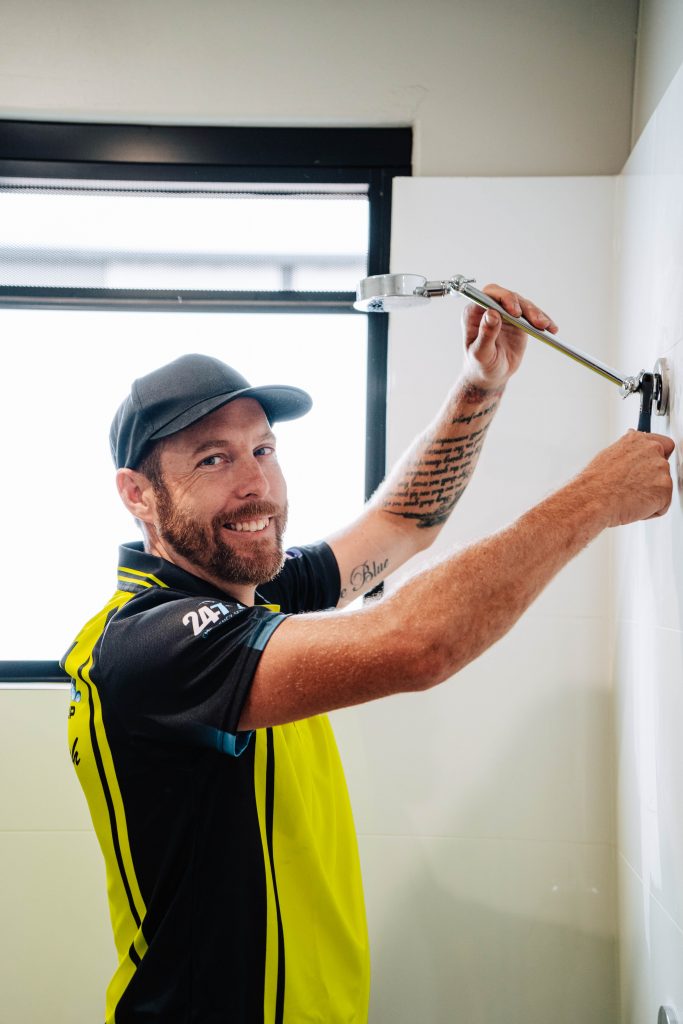
Not all shower leaks look like a puddle on the floor. Many of them are “silent leaks” that stay hidden until mould, smells, or damage shows up.
Below are the most common causes we find in Penrith homes, plus the real plumbing work that often fixes them.
1) Silicone failure in corners and along the shower base
Silicone is the flexible seal that should stop water sneaking into wall/floor joints. Over time, silicone can crack, shrink, lift, or separate—especially where the shower base meets the wall.
Common signs:
- Silicone looks split, brittle, or peeling
- The corner stays darker (wet-looking) even hours later
- Mould forms in a neat line along the edge
- You can press the silicone and feel a gap
What’s really happening: Water is slipping behind the silicone, then sitting where you can’t see it.
Service tie-in: This usually starts as a sealing issue, but we often check more than just the visible line. During a bathroom inspection we’ll also look for:
- Movement in the base (which re-breaks seals)
- Gaps around tapware penetrations
- Drainage speed (pooling keeps corners wet)
2) Cracked or deteriorated grout (even tiny hairline cracks)
Grout isn’t meant to be your main waterproof barrier. It’s a surface finish. In older bathrooms—or bathrooms that move slightly—grout develops micro-cracks.
Common signs:
- Thin cracks between tiles
- Powdery grout that rubs away
- Grout that stays dark in one area
- Mould that “prints” in the grout lines only
What’s really happening: Water finds the easiest path. One crack in the same corner can feed mould constantly.
Service tie-in: We often combine leak checks with general plumbing inspections and testing, because sometimes the grout looks guilty but the real cause is a small plumbing leak inside the wall.
3) Leaks around the shower head arm or wall outlet
That round plate behind your shower head connection can hide a lot. If the fitting is loose or the seal behind the plate has failed, water can slip straight into the wall.
Common signs:
- Dampness around the plate
- Mould higher up the wall (not just near the floor)
- Musty smell after hot showers
- Water staining on the other side of the wall
Service tie-in: This is a common shower plumbing repair job. We may:
- Tighten/replace fittings
- Re-seat seals
- Check for hidden pipe leaks (pressure testing where appropriate)
4) Mixer tap leaks behind the wall (a big one people miss)
Your mixer tap has internal seals and cartridge components that wear out. When they fail, water can leak behind the wall without dripping into the shower.
Common signs:
- Mould in one corner and a damp patch spreading sideways
- Paint bubbling or skirting swelling in the next room
- A drip sound when everything is “off”
- Water pressure changes or inconsistent temperature
Service tie-in: This is where plumbing repairs and installations matter. We handle:
- Mixer repairs and replacements
- Valve and seal checks
- Controlled shut-off testing
- Leak detection to confirm the source before repairs
5) Shower base movement and “micro-gaps”
If the base flexes slightly, it stresses grout and silicone until tiny openings form. These gaps can open and close as people stand in the shower—meaning leaks can be on-and-off and hard to catch.
Common signs:
- Tiles or base feel like they “give” underfoot
- Silicone cracks keep returning in the same spot
- Tiles sound hollow near the corner
- Mould returns fast after resealing
Service tie-in: We’ll check whether the issue is just surface sealing or something deeper, and we can coordinate the right repair pathway once we confirm whether plumbing, drainage, or waterproofing is involved.
6) Slow or partially blocked shower drains causing corner pooling
Even if your shower “eventually” drains, a slow waste line can cause water to sit in the same corner every day. Constant dampness = perfect mould conditions.
Common signs:
- Water pools near the same corner after showering
- Gurgling sounds
- Bad smells from the drain
- Soap scum and hair build up returning quickly
Service tie-in: This is where our drain services come in:
- Blocked drain clearing and repairs
- Water jetting to remove stubborn build-up
- Drain/sewer cleaning
- Camera inspections to confirm the line is clear and to check for tree roots or pipe damage
7) Waterproofing membrane failure under tiles
This is the “it keeps coming back no matter what” scenario. When the membrane fails, water goes under the surface repeatedly.
Common signs:
- Mould returns even after re-grouting or re-siliconing
- Damp smell that never truly goes away
- Skirting boards swelling outside the bathroom
- Cracks appearing in multiple grout lines
- Moisture spreading beyond one corner over time
Service tie-in: While waterproofing work may involve a bathroom specialist, our role is crucial: we help confirm whether the moisture is from plumbing leaks, drainage problems, or membrane failure, so you don’t waste money on the wrong fix.
Is it a shower leak or just condensation? (A simple way to tell)
Bathrooms naturally get steamy—especially with hot showers and cold mornings in Greater Western Sydney. But there’s a key difference:
- Condensation mould tends to show up across multiple areas (ceiling corners, window frames, behind the door).
- Leak-fed mould usually sticks to the same spot and returns quickly.
More likely a hidden leak if:
- It’s always the same corner
- The grout stays darker there (looks damp)
- The smell is musty even when the bathroom looks “dry”
- Mould returns within days of cleaning
- A nearby room shows dampness, staining, or soft walls
More likely condensation if:
- Mould appears in several corners and on ceilings
- You have poor ventilation or no working exhaust fan
- The bathroom stays foggy long after showering
- You see water droplets on walls and windows
Service tie-in: If you’re unsure, that’s exactly when leak detection and inspections and testing save you time. We can confirm whether it’s a plumbing leak, drainage issue, or moisture management problem—so you’re not guessing.
Why ignoring a hidden shower leak gets expensive (even if the mould looks small)
Mould is the visible symptom. The real risk is what’s happening behind the tiles.
What hidden water can damage over time:
- Plasterboard and paint: bubbling, peeling, soft spots
- Timber framing: rot and structural weakening
- Tile adhesive: tiles loosen or “drum”
- Flooring outside the bathroom: swelling, lifting, warping
- Metal components: corrosion around fittings and fixings
Practical reality:
A small leak that runs for months can turn a simple repair into a larger project. The earlier you act, the more likely you can avoid invasive work.
Service tie-in: This is why we offer:
- 24/7 emergency plumbing (if water starts spreading fast)
- Leak detection (to find it early)
- General plumbing repairs (to stop the source)
- Drain camera inspections (if drainage is part of the issue)
Safe DIY checks you can do today (before you call a plumber)
You don’t need to break tiles to get clues. Here are safe checks that help you decide what to do next.
1) “Dry and watch” test (24 hours)
- Clean the area and dry it completely.
- Avoid using the shower for 24 hours.
- Check if the corner still looks damp or smells musty.
If it stays damp without shower use, there may be a pipe leak or moisture coming from another nearby source.
2) “Shower-only” test (10 minutes)
- Start with a dry bathroom.
- Run the shower for 5–10 minutes, aiming water at the suspected wall/corner.
- Check the corner 30–60 minutes later.
If it darkens quickly, water may be escaping behind tiles.
3) Drain speed check (pooling = a clue)
If water sits in that corner daily, even a little, mould has a constant water supply.
If it’s slow:
- Remove hair/soap build-up at the grate
- If it keeps happening, don’t keep guessing—blocked lines often need proper drain clearing or water jetting
4) Water meter movement check (for bigger leaks)
- Turn off everything (taps, washing machine, dishwasher).
- Look at the meter.
- If it keeps moving, you likely have a leak somewhere.
Important note: Re-siliconing can help in some cases, but if the leak is behind the wall or under tiles, surface fixes won’t stop the moisture.
How we find hidden shower leaks in Penrith (without guesswork)
At Local Blacktown Plumber, our goal is to find the real source of moisture so your repair actually lasts.
Depending on what we see, we may use a combination of:
Targeted plumbing inspections and testing
- Checking fittings, water pressure behaviour, and likely failure points
- Inspecting shower penetrations (shower head outlet, mixer area)
- Checking nearby fixtures (taps, toilets, vanity plumbing) because leaks can travel
Leak detection processes
- Isolation checks to separate plumbing leaks from surface water entry
- Controlled testing to identify where water is escaping
- Advice on next steps based on what the test confirms
Drain and sewer checks (when needed)
If we suspect drainage issues:
- Camera inspections to confirm the drain’s condition
- Blocked drain clearing
- Water jetting to remove build-up and restore flow
- Checking for tree root intrusion (common in older lines)
This approach helps you avoid paying for cosmetic repairs that don’t solve the cause.
Fix options that stop mould from returning (based on the real cause)

Different causes need different fixes. Here are the most common repair pathways.
If silicone/grout failure is the main issue
- Remove failed silicone properly and reseal correctly
- Address gaps around edges and penetrations
- Check for movement that will re-break the seal
Best for: Early-stage leaks where water hasn’t spread deep.
If plumbing behind the wall is leaking
- Repair/replace faulty fittings (mixer, shower outlet, pipework)
- Confirm the repair with follow-up testing
- Check nearby fixtures because leaks can migrate
Service tie-in: This is core residential plumbing in Penrith work—repairs and replacements done to stop the source, not just hide the symptom.
If drainage and pooling are feeding damp corners
- Clear the line properly (not just surface cleaning)
- Use water jetting for stubborn soap scum and sludge
- Use a camera inspection to confirm clear flow and identify damage
Best for: Showers where water lingers, gurgles, or smells.
If waterproofing has failed
- You may need a more involved repair plan (sometimes rebuilding the shower area)
- Our role is to confirm whether plumbing/drainage is involved so you don’t rebuild unnecessarily
How to prevent shower mould once the leak is fixed (simple habits that work)
Once the leak is stopped, prevention becomes easy and cheap.
A practical mould-prevention routine
- Run exhaust fan during showers + 15–20 minutes after
- Open a window/door when possible for airflow
- Squeegee walls and glass (30 seconds, big payoff)
- Keep drains flowing: hair traps and regular cleaning
- Don’t use harsh chemicals that destroy grout/silicone over time
- Book a quick plumbing check if you notice recurring slow drainage or damp smells
Service tie-in: We also help homeowners reduce future issues with:
- General plumbing checks (taps, toilets, shower fittings)
- Drain maintenance and cleaning
- Leak detection for early warning signs
When to call a plumber urgently (don’t wait on these signs)
Some shower leaks stay small. Others escalate quickly.
Call urgently if you see:
- Water dripping through the ceiling below the bathroom
- Wet carpet/flooring outside the bathroom that keeps spreading
- Strong sewer smells or gurgling drains (possible blockage)
- Sudden changes in water pressure or unexplained high water use
- Moisture near power points or lights
We provide 24/7 emergency plumbing, so if a leak turns serious at night or on weekends, you can still get help.
FAQs: Hidden shower leaks and mould in Penrith homes
Why does mould come back after I clean it?
Because cleaning removes surface mould, but doesn’t remove the moisture source. If water is still getting behind tiles, mould returns.
Can a shower leak without visible water?
Yes. Many leaks soak into walls/floors behind tiles and only show up as mould, smells, or swelling outside the shower.
Will re-siliconing always fix it?
Not always. It helps if silicone is the only failure. If plumbing or waterproofing is the cause, silicone alone won’t stop the moisture.
Is a slow drain connected to mould?
Often, yes. Pooling water keeps the same corner damp daily. That’s why drain clearing and water jetting can be part of the solution.
What services should I ask for?
Ask for leak detection, bathroom plumbing inspection, and if drainage is slow or smelly, ask for camera inspection and blocked drain clearing.
Book leak detection and shower repairs in Penrith (stop the mould at the source)
If mould keeps returning in the same corner, it’s usually your bathroom’s way of saying: something is staying wet behind the surface. Don’t keep scrubbing, repainting, and hoping. The longer hidden moisture continues, the more damage it can cause.
Local Blacktown Plumber helps Penrith homeowners with:
- Hidden shower leak detection (water, shower, and even gas leak checks if needed)
- General plumbing repairs and installations (taps, toilets, showers, inspections and testing)
- Blocked drain clearing and repairs (including water jetting, drain/sewer cleaning, camera inspections, tree root removal)
- Hot water system supply, installation, servicing, and repairs (gas, electric, instant, heat pumps, solar, commercial)
- Gas fitting and gas plumbing (appliance installs, repairs, gas leak detection)
- Water filtration solutions for cleaner household water
- 24/7 emergency plumbing when leaks can’t wait
For fast help with residential plumbing in Penrith, call Local Blacktown Plumber on 291583589 and book an inspection today.