Outdoor Tap Leaks Only When You Turn It On: Washer vs Seat Damage Explained
Outdoor taps (also called garden taps, hose taps, or bib taps) are one of those plumbing fixtures you don’t think about—until they start leaking. What throws many homeowners off is when the tap doesn’t leak when it’s off, but starts leaking the moment you turn it on. That usually means the problem isn’t “constant failure,” but a pressure-and-seal issue—something that only shows up when water is flowing at full pressure through the tap.
In Australian homes, outdoor taps often get a tougher life than indoor ones. They sit in sun and rain, get bumped by hoses and ladders, are used to fill buckets, connect pressure washers, water gardens, top up pools, and sometimes run irrigation lines. Over time, the internal parts wear down, seals harden, and metal surfaces get rough. The good news: many outdoor-tap leaks are fixable without major plumbing work—if you identify the correct cause early.
This pillar guide explains the most common causes, especially the big two: washer damage vs seat damage. We’ll also cover other hidden causes (like O-rings, cracked tap bodies, and loose wall connections), what you can check safely, and when it’s smarter to call a licensed plumber to prevent wall damage, mould, or wasted water.
And because we’re a plumbing company that handles everything from emergency callouts to leak detection and water filtration, we’ll explain where an outdoor tap problem can connect to bigger issues across your property—especially if you’re trying to stay on top of residential plumbing in Penrith and surrounding areas.
Why an Outdoor Tap Can Leak Only When It’s On
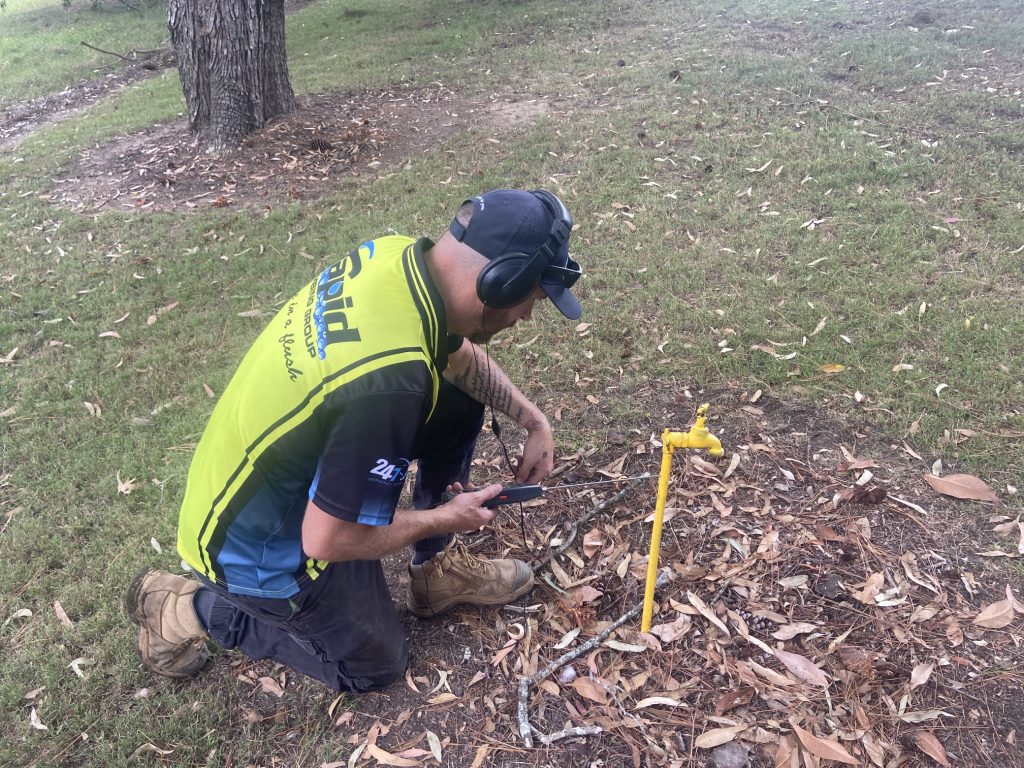
A tap that leaks only when it’s turned on usually means water is escaping under pressure, but the moment the flow stops, the leak reduces or disappears. This can happen because:
- The internal seal doesn’t sit correctly when water is moving through the valve
- The metal surfaces inside the tap are damaged, pitted, or uneven
- The spindle seals are worn and only leak when pressurised
- A connection joint is loose and only leaks during flow
- A hairline crack opens slightly when water pressure increases
The “only when on” clue is useful because it helps narrow down the fault quickly.
Common leak locations (and what they usually mean)
- From the spout/outlet (the part water comes out of): Often washer or seat issues, or sometimes turbulence caused by internal wear.
- From behind the handle: Usually a spindle O-ring, gland/packing issue, or loosened bonnet nut.
- From the wall connection: Often a loose fitting, worn thread seal, cracked connector, or pipe damage inside the wall.
- From the tap body itself: Often a split tap body (age, corrosion, or impact damage).
If your outdoor tap is attached to a hose, it’s also possible the leak is coming from the hose fitting or connector, not the tap. This is one of the easiest fixes and often gets missed.
Quick Tap Anatomy (So the Rest Makes Sense)
Understanding the basic parts of a tap makes troubleshooting much easier. You don’t need tools for this part—just a clear picture of how it works.
Key parts inside a traditional outdoor tap
- Handle: The part you turn.
- Spindle (stem): The rod that moves up/down as you turn the handle.
- Washer: A small rubber disc at the end of the spindle that presses down to stop water.
- Seat: The fixed metal surface inside the tap that the washer presses against to make a watertight seal.
- Bonnet / gland / packing area: The section where the spindle passes through the tap body—this is where handle leaks usually happen.
- Tap body: The main metal housing connected to your pipework.
What happens when you turn the tap on and off
- When you turn the handle anti-clockwise, the spindle lifts the washer away from the seat and water flows.
- When you turn the handle clockwise, the washer presses tightly onto the seat and stops water.
So if the seal between the washer and seat is weak, or if the spindle seals are worn, you get leaks under pressure—especially while water is flowing.
Washer Damage Explained (Most Common and Usually Cheaper)
The washer is the most common culprit, mainly because it’s made of rubber and rubber doesn’t last forever—especially outdoors where temperatures swing, UV exposure is constant, and water quality can vary.
What the washer actually does
The washer is designed to compress tightly against the seat to create a “soft seal.” Over time, the washer can:
- Harden and lose flexibility
- Crack or split
- Wear down unevenly
- Break into small pieces
- Become misshapen and stop sealing evenly
Signs your outdoor tap likely has a washer problem
Washer issues can show up as:
- A light leak or drip at the spout when the tap is partly open
- A spluttery leak when you first turn the tap on
- A leak that improves slightly when you adjust the handle position
- A tap that needs extra turning to stop completely
- Reduced flow or inconsistent stream (washer debris can partially block the outlet)
Why washer issues can cause “leak only when on”
Some washers don’t fail in a simple “always leaking” way. Sometimes they only leak when:
- The tap is opened enough to create high flow
- Water pushes the washer sideways due to uneven wear
- Vibration from the hose or pipe movement shakes the washer slightly
- The washer flexes under pressure and can’t hold shape
This is especially common if:
- The washer is old and stiff
- The tap has been over-tightened in the past (flattening the washer unevenly)
- There’s grit or sediment in the water line
A plumber’s approach (what we’d do)
At Local Blacktown Plumber, we don’t just replace the washer and leave if the tap is older. We often:
- Check if the seat is worn (because washer replacement won’t last if the seat is damaged)
- Inspect the spindle condition
- Check for leaks behind the handle (O-ring/gland)
- Confirm the wall fitting isn’t leaking under flow
- Test the water pressure if repeated seal failures are happening
This is part of responsible residential, commercial, and industrial plumbing work—fixing the cause, not just the symptom.
Seat Damage Explained (Often the Real Culprit in Repeat Leaks)
If you’ve replaced the washer before and the leak keeps coming back, the seat becomes the #1 suspect.
What the seat is (in plain English)
The seat is the metal ring inside the tap that the washer presses against. It must be smooth and flat for the washer to seal properly.
How seats get damaged
Seat damage happens due to:
- Years of washer friction rubbing the same spot
- Mineral scale buildup (hard water deposits)
- Corrosion (especially in older taps)
- Grit/sand scratching the surface
- Over-tightening the handle, which can cut grooves into the seat
A damaged seat often looks like:
- A thin groove or ring cut into it
- Pitting or rough patches
- Uneven metal surface
Signs it’s the seat (not the washer)
- You replace the washer and the leak returns quickly
- The leak never fully stops, even after washer replacement
- The tap must be cranked very tight to stop leaking
- The handle feels rough, crunchy, or stiff
- Water leaks more aggressively at higher flow
Why seat damage can cause “only when on”
When water is flowing, pressure and turbulence inside the tap increase. A damaged seat can create tiny gaps between the washer and seat surface, allowing water to escape under flow conditions.
Think of it like trying to seal a rubber plug against a dented surface—the rubber can’t fill every groove, especially when water pressure is pushing through.
How seat damage is fixed properly
A plumber will usually do one of these:
- Reseating (seat re-facing)
A special seat-cutting tool smooths the seat surface so a washer can seal again. - Replacing the tap
Often more cost-effective if:
- The tap body is corroded
- Threads are worn
- Multiple parts are aged
- The tap is cheap and not worth reseating
We’ll recommend what makes sense long-term—especially if you want fewer repeat repairs.
Washer vs Seat: A Simple Checklist You Can Use at Home
Here’s a more detailed way to narrow it down.
Likely washer damage if:
- The tap is under ~5–8 years old (or looks relatively new)
- Leak started recently after heavy outdoor use
- Handle still turns smoothly
- Leak changes depending on how far you open it
- No history of repeated washer replacements
- The leak is mild and mainly at the spout
Likely seat damage if:
- Leak returns quickly after washer replacement
- Tap has been over-tightened for years
- Handle feels rough or stiff
- Tap is old or heavily corroded
- Leak is persistent and doesn’t respond to new washer
- Leak is worse at high flow
If you’re stuck, a plumber can identify it quickly and save you wasting money on repeated washers.
Other Common Causes of “Leaks Only When On” (Don’t Miss These)
Outdoor tap leaks can look like washer or seat issues but actually be something else. These are the big ones.
1) O-ring or gland leak (leak behind the handle)
What it looks like: Water appears around the handle or runs down the tap body when it’s on.
What causes it:
- Worn spindle O-ring
- Loose bonnet nut
- Failed gland packing
Why it matters:
This kind of leak can soak external walls and cause mould, rotting timber frames, or paint damage over time.
How we fix it:
We replace seals, adjust gland packing if needed, and pressure-test the tap to confirm it’s fully sealed.
2) Loose connection at the wall (or failing thread seal)
What it looks like: Water drips behind the tap, around the wall plate, or along the pipe entry point only when the tap is running.
What causes it:
- Loose fitting
- Failed thread tape/sealant
- Cracked tap thread
- Damaged wall fitting
Why it matters:
If water is leaking into a wall cavity, it can:
- Cause rising damp
- Damage render or brickwork
- Create mould inside walls
- Rot timber frames
- Attract termites in some areas
How we handle it professionally:
We inspect the fitting, reseal/replace the tap properly, and if needed use leak detection tools to confirm there’s no hidden damage behind the wall.
3) Split tap body (crack in the metal)
What it looks like: A spray or weep from the tap body—not from the spout or handle.
What causes it:
- Corrosion
- Impact (hose yanked sideways, ladder bump)
- Metal fatigue over time
Fix: Replace tap. Sealants are not reliable under pressure.
4) Excessive water pressure (hidden system problem)
What it looks like: Outdoor taps and fittings keep failing, hoses burst, pipes bang, and washers don’t last.
What causes it: High mains pressure or a failing pressure limiting valve.
Why it matters:
High pressure stresses your whole plumbing system—not just the tap. It can shorten the lifespan of:
- Taps and mixers
- Toilet inlet valves
- Hot water systems (gas/electric/solar/heat pump)
- Washing machine hoses
- Filters and cartridges in water filtration systems
What we do:
We can perform inspections and testing (including pressure checks) and recommend solutions like adjusting or installing a pressure limiting valve.
5) Hose connector or quick-connect fitting leak
What it looks like: Leak happens only when hose is attached, or water sprays around the connector.
Fix: Replace the hose washer or connector—often a 2-minute fix.
Safe DIY Checks (What You Can Do Without Making It Worse)
Before you try to dismantle anything, do these safer checks:
- Remove the hose first
Turn on the tap without the hose.
- If leak stops → hose/connector issue.
- Dry everything and observe
Use a towel and watch where water forms first:
- spout, handle, wall connection, or body
- Lightly tighten the bonnet/gland nut
If leaking from behind the handle, a small adjustment may help.
Don’t over-tighten—this can make the handle hard to turn and worsen wear. - Check your outdoor tap setup
If the tap feeds irrigation, pool top-up lines, or external laundry connections, leaks can affect those systems too.
If you suspect a leak inside the wall or under paving, stop and call a plumber—hidden leaks are where costs jump fast.
When a Plumber Should Handle It (And Why It’s Worth It)
Call a licensed plumber if:
- The tap is seized, old, or heavily corroded
- The leak is near the wall connection or inside the wall
- You’ve replaced the washer and it still leaks
- You suspect seat damage
- You hear banging/hammering (pressure issue)
- You manage a rental, strata, or commercial property and need reliable repairs
At Local Blacktown Plumber, we’re not just a “tap repair” crew. Outdoor tap leaks often connect to bigger plumbing concerns like pressure issues, hidden pipe damage, or ageing fittings—so we treat it as part of a full plumbing system.
Our services that commonly relate to outdoor tap leak jobs include:
- 24/7 emergency plumbing (urgent leaks and burst pipes)
- General plumbing repairs and installations (taps, toilets, showers, valves)
- Leak detection (water, shower, pool, and gas)
- Inspections and testing (pressure testing and system checks)
- Blocked drains and sewer services (jetting, camera inspections, tree root removal)
- Gas fitting and gas leak detection (for properties where plumbing work crosses into gas areas)
- Hot water systems (if pressure issues affect hot water performance)
- Water filtration solutions (if sediment is damaging seals and washers)
Preventing Outdoor Tap Leaks in the Future
Outdoor taps last longer with small habits:
- Turn gently—don’t crank the handle tight.
- Use quality washers (cheap washers wear fast).
- Replace hose washers regularly so you don’t overtighten connectors.
- Install a tap timer correctly—poor fittings can stress the outlet.
- Check pressure if multiple fixtures keep leaking or failing.
- Maintain your plumbing system annually, especially in older homes.
We often include outdoor taps in a broader maintenance approach for residential plumbing in Penrith—because prevention is cheaper than emergency repairs.
FAQs (AEO-Friendly Quick Answers)
Why does my outdoor tap leak only when turned on?
Because water pressure and flow expose weak seals or damaged surfaces—like a worn washer, damaged seat, leaking spindle O-ring, or loose wall connection.
Should I replace the washer or the whole tap?
Try washer replacement if the tap is in good condition. But if leaks keep returning, the seat may be damaged, or the tap body may be too worn—replacement is often best.
Is it dangerous if water leaks into the wall?
It can be. Hidden leaks can cause mould, rot, damp, and structural damage. If you see damp bricks or wet patches, stop using the tap and call a plumber.
Need Help Today? Call Local Blacktown Plumber
If your outdoor tap leaks only when you turn it on, don’t guess—and don’t keep tightening it until the seat is ruined or the fitting cracks. The right fix depends on whether it’s the washer, seat, spindle seal, or a wall connection leak—and a quick professional diagnosis saves time, money, and water.
Local Blacktown Plumber can help with:
- Outdoor tap repairs and replacements
- Washer and seat diagnosis (including reseating where suitable)
- Leaks behind handles and wall connections
- Leak detection and inspections/testing
- Full residential, commercial, and industrial plumbing support
- 24/7 emergency plumbing for urgent leaks
📞 Call Local Blacktown Plumber: 291583589
For dependable work that protects your home and supports your residential plumbing in Penrith needs—done properly, the first time.