Pipe Relining vs Pipe Replacement: Questions for Your Blacktown Plumber
| Quick answer: The choice between pipe relining vs pipe replacement in Blacktown comes down to how much of the original pipe is still structurally sound. Relining cures a resin liner inside your existing pipe, so it needs a host pipe that is cracked or root-invaded but still holding its shape, and it usually avoids digging up your yard. Replacement means excavating and laying new pipe, and it becomes the better option when a line has collapsed, sagged into a belly, or is badly misaligned at the joints. A camera inspection is the only reliable way to tell which situation you are in, so ask your plumber to show you the footage before you approve anything. |
What this article covers
- Pipe relining vs pipe replacement: what each method actually involves
- Why Blacktown properties end up with damaged pipes
- Six questions to ask before you approve the quote
- When pipe replacement is still the right call
- What a good Blacktown quote should include
- Key takeaways
- Frequently asked questions
You have had the same drain back up three times this year. A plumber has finally run a camera down the line, and now you are holding two very different recommendations: reline the pipe, or dig it out and replace it. One sounds tidier. The other sounds more permanent. Both sound expensive, and you are being asked to decide about something you will never see.
Pipe relining vs pipe replacement: what each method actually involves
Before the questions make sense, it helps to know what you are choosing between.
How pipe relining works
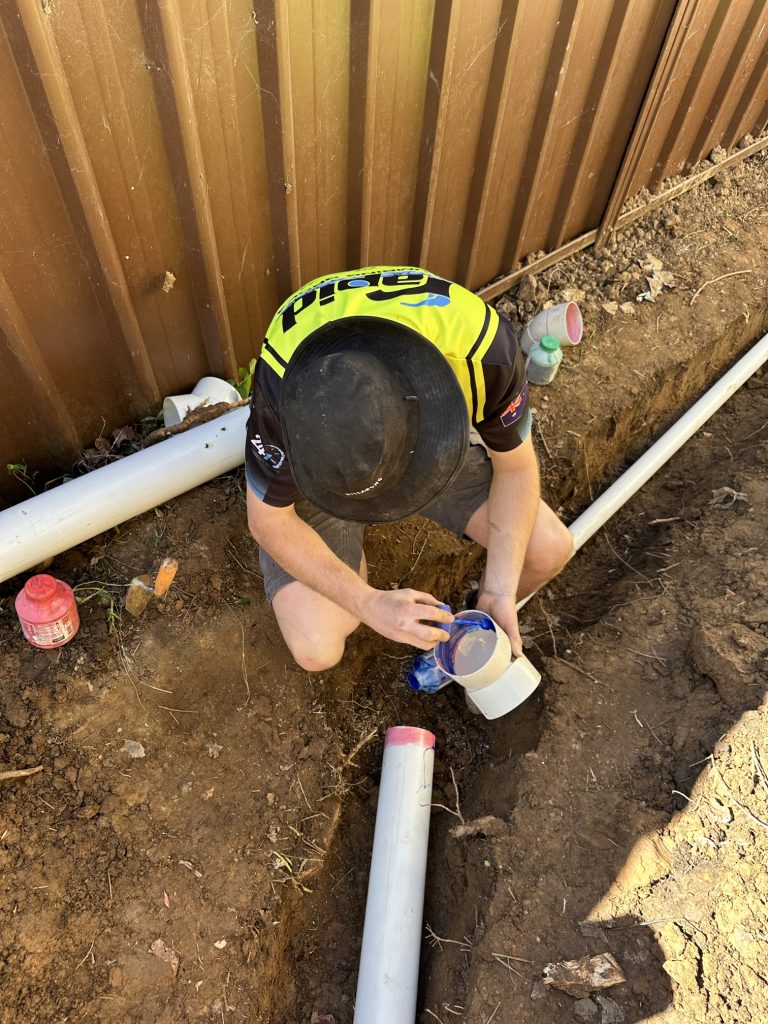
Relining is a no-dig repair. The plumber cleans the inside of the damaged pipe, usually with a high pressure water jet, then inserts a flexible liner saturated with resin. The liner is inflated so it presses tight against the inner wall of the old pipe, and the resin is left to cure. What you end up with is a new pipe formed inside the old one, bonded to it, with joints and cracks sealed along the way.
The appeal is obvious. Your driveway, your paving, your lawn and the tree that has been there since your kids were small all stay where they are. Access is generally through an existing inspection opening or a small excavation at one point rather than a trench running the length of the property. Most jobs are completed faster than a full dig, and the disruption to your household is smaller.
How pipe replacement works
Replacement is the traditional approach. The damaged section is excavated, the old pipe is removed, and new pipe is laid, bedded, joined and backfilled. If the run passes under a driveway, a slab, a retaining wall or established garden beds, those get opened up too. It is more invasive, but what you get in return is a completely new line with new falls, new joints and no reliance on whatever was there before.
| Still working out what you are dealing with? If your drains are slow, gurgling or backing up and nobody has looked inside the line yet, a camera inspection is the sensible first step. Have a look at our blocked drain and drainage solutions in Blacktown to see how we diagnose recurring blockages before recommending any repair. |
Why Blacktown properties end up with damaged pipes
Local context matters more than people expect, because it shapes which repair is likely to suit your property.
A large share of housing across Blacktown and the surrounding Western Sydney suburbs went up well before modern PVC drainage became standard. Older homes in areas like Seven Hills, Doonside, Lalor Park and Marayong often still run on vitrified clay or earthenware sewer lines. Clay pipe is durable, but it is laid in short sections with jointed connections, and those joints are exactly where tree roots find their way in. Add the mature figs and gums that give these suburbs their character, and root intrusion becomes one of the most common causes of drainage failure locally.
Ground movement is the second factor. Much of Western Sydney sits on reactive clay soil that swells when wet and shrinks in dry periods. Over decades, that movement can shift a pipe out of alignment, open joints, or create a low point where waste and water pool instead of flowing away. Plumbers call that a belly, and it matters a lot for the relining conversation.
One more thing worth knowing. In Sydney, the sewer main in the street is Sydney Water’s responsibility, but the line running from your home to the connection point is generally the property owner’s. If the fault sits on your side of that boundary, the repair is yours to arrange and pay for. Ask your plumber to confirm which side of the boundary the damage falls on before anything else is decided.
Six questions to ask before you approve the quote
These are the questions that separate a confident recommendation from a guess. A good plumber will welcome all of them.
1. Can you show me the camera footage, and walk me through what I am looking at?
This is the first and most important one. Nobody should be recommending relining or replacement without having put a camera down the line, and you are entitled to see what they saw. Ask them to pause on the damage and explain it in plain terms: is that a crack, a root mass, an offset joint, a collapse, or a section holding water? Ask for a copy of the footage too, so you have a baseline if problems return.
2. Is the host pipe sound enough to reline?
Relining depends on the old pipe still being able to act as a mould. If the line is cracked, root-invaded or has open joints but is otherwise holding its round shape and its fall, it is usually a strong candidate. If a section has collapsed inward, dropped into a belly, or the joints have moved so far out of line that the liner cannot pass cleanly, relining may not suit that section. The answer you want here is specific, naming which runs can be lined and which cannot. Vague reassurance is a flag.
3. Does the whole line need doing, or just part of it?
Plenty of jobs are hybrids. It is fairly common to excavate and replace a short failed section, then reline the rest of the run to seal the joints and stop roots returning. Ask which sections are being treated, how many metres are involved, and why that scope was chosen.
4. What is being dug up, and who puts it back?
Relining reduces excavation, but it rarely eliminates it entirely. There is often at least one access point. Replacement can mean a trench across a lawn, through a garden bed, or under paving, concrete or a driveway.
Ask exactly where the digging happens, and get reinstatement in writing. A well-run job often combines both methods: dig where you must, reline where you can. Does the quote include replacing the concrete, relaying the pavers, restoring the turf? Backfilling a trench and leaving a mound of dirt is not the same as putting your yard back, and the difference between the two can be substantial once you are pricing the repairs yourself.
5. What is the expected life of the repair, and what is guaranteed?
Ask two separate things, because they are not the same. First, the expected service life of the method and materials. Second, the actual warranty: how long it runs, whether it covers labour and reinstatement as well as the pipe, whether it transfers if you sell, and what would void it.
6. What happens if you find something worse once you start?
Underground work has a habit of revealing surprises. A pipe can look lineable on camera and turn out to be worse once it has been cleaned and re-inspected. Ask how variations are handled: will you be contacted before extra work proceeds, will you get a revised price in writing, and is there a cap on what can be added without your approval?
| Comparing two quotes and not sure they are describing the same job? That is a common and reasonable place to be stuck. Our team can inspect the line, explain what the camera shows in plain language, and set out honestly whether pipe relining in Blacktown suits your property or whether replacement is the more sensible option. If the pipe has already failed and is leaking, our burst pipe repair service deals with the urgent part first. |
When pipe replacement is still the right call
Relining gets most of the attention because the no-dig pitch is appealing. It is not always the answer, and a plumber who recommends replacement is not automatically upselling you. Replacement tends to be the stronger choice when:
- The pipe has collapsed. There is nothing left to line against, so the section has to come out.
- There is a significant belly or sag. Relining follows the existing shape of the pipe. If the line dips and holds water, a liner will preserve that dip. Correcting the fall means re-laying the pipe.
- Joints are badly offset. When sections have shifted far out of alignment, a liner may not seat properly across the gap.
- The line is severely undersized or poorly routed. If the original installation was wrong for the load, keeping its dimensions in place carries the problem forward.
- You are already excavating for another reason. If the area is being opened up for a renovation, extension or landscaping, the cost balance can shift.
What a good Blacktown quote should include
Whichever direction you go, the paperwork should be specific enough that you could hand it to another plumber and they would understand exactly what was proposed. Look for:
- The plumber’s NSW licence number, clearly stated.
- A description of the diagnosis, ideally referencing the camera inspection, not just the symptom.
- The scope in metres, with the sections identified.
- The method for each section, including any hybrid approach.
- Materials and liner type being used.
- Excavation and reinstatement responsibilities, spelled out.
- Warranty terms and duration in writing.
- How variations will be priced and approved.
- A post-works camera inspection so you can see the finished result.
It is also worth thinking past this one repair. If tree roots caused the damage, they will keep looking for a way back in. Scheduled maintenance plumbing and periodic camera checks catch re-entry early, when it is still a jetting job rather than another major repair. And if you have noticed unexplained water use or damp patches alongside the drainage issue, water leak detection is worth running at the same time, since a second fault on the water supply side is easy to miss while everyone is focused on the sewer line.
Key takeaways
- Relining and replacement solve different problems. The condition of the existing pipe decides which applies, not preference.
- No recommendation should be made without a camera inspection, and you should see the footage.
- Collapses, bellies and badly offset joints usually point toward replacement. Cracks, root intrusion and open joints in an otherwise sound pipe usually point toward relining.
- Hybrid jobs are normal and often the most sensible outcome.
- Reinstatement, warranty terms and variation handling belong in the written quote, not in a verbal reassurance.
- Confirm whether the fault sits on your property or on Sydney Water’s side of the connection before you commit to anything.
Frequently asked questions
Is pipe relining cheaper than pipe replacement in Blacktown?
It often works out lower overall, mainly because excavation and reinstatement are reduced or avoided. That said, the pipe repair itself is only part of the picture, and a short, shallow, easily accessible replacement can sometimes come in under a long reline. Compare total quoted cost including making good, not the headline repair figure.
How long does pipe relining last?
Cured-in-place liners are designed as a long-term structural repair rather than a patch, and manufacturers generally rate them for many decades of service under normal conditions. Actual life depends on the liner system used, installation quality, and what is going through the pipe. Ask your plumber for the manufacturer’s rating and the warranty they attach to it.
Can any damaged pipe be relined?
No. Relining needs a host pipe that has retained its shape and alignment. Collapsed sections, significant sags and severely offset joints generally need excavation, though the rest of the same line may still be suitable for relining afterwards.
Will I need to leave the house during the work?
Usually not. Drainage will be out of action for periods while the work is done, so plan around limited toilet, shower and laundry use. Your plumber should tell you in advance roughly how long the line will be offline each day.
Do tree roots come back after relining?
A properly installed liner seals the cracks and joints roots were using, which removes the entry point. Roots can still find a new opening elsewhere on the line, particularly on sections that were not treated, so periodic camera checks remain worthwhile on properties with mature trees nearby.
Who is responsible for the sewer pipe on my Blacktown property?
As a general rule in Sydney, the main in the street belongs to Sydney Water and the line running from your home to the connection point belongs to the property owner. Have your plumber confirm where the damage sits relative to that boundary, because it determines who arranges and pays for the repair.
| Get a straight answer on your line. If drains are backing up, smells are lingering or you already have a quote you would like a second view on, call Local Blacktown Plumber on (02) 9158 3589. We will camera the line, show you what is actually going on down there, and give you an honest recommendation on relining versus replacement with the scope and warranty in writing. You can see our full range of services, including hot water repairs, on the Local Blacktown Plumber website. |