Water Pooling Around an Outdoor Drain Grate: Why It Happens in Dry Weather
What an outdoor drain grate actually does (and how it connects to your home)
An outdoor drain grate is like the “mouth” of your stormwater system. It’s designed to collect surface water from places like your driveway, patio, side path, or backyard and move it away through underground pipes. In most Australian homes, these grates connect to stormwater lines (not sewer lines), which then discharge to a legal point like the street kerb, a council-approved outlet, or a designated drainage system.
But here’s the part many homeowners don’t realise: even in dry weather, your stormwater system can still receive water because your home creates water outside in other ways—like washing down paths, watering gardens, or small leaks that never show up indoors.
At Local Blacktown Plumber, we often find that outdoor drain pooling is not “just a surface issue.” It’s usually a sign that something is happening under the ground (a partial blockage, root intrusion, a pipe that has sunk, or a broken joint). This is why we use real diagnostic tools—like CCTV drain camera inspections and targeted testing—before recommending a fix.
If you’re dealing with residential plumbing in penrith, outdoor drainage matters a lot because shifting soil, leaf litter, and tree roots are common in suburban yards. The sooner you deal with small pooling, the less chance it has to turn into soggy soil, damaged paving, or recurring blockages.
Why water can show up even when it hasn’t rained
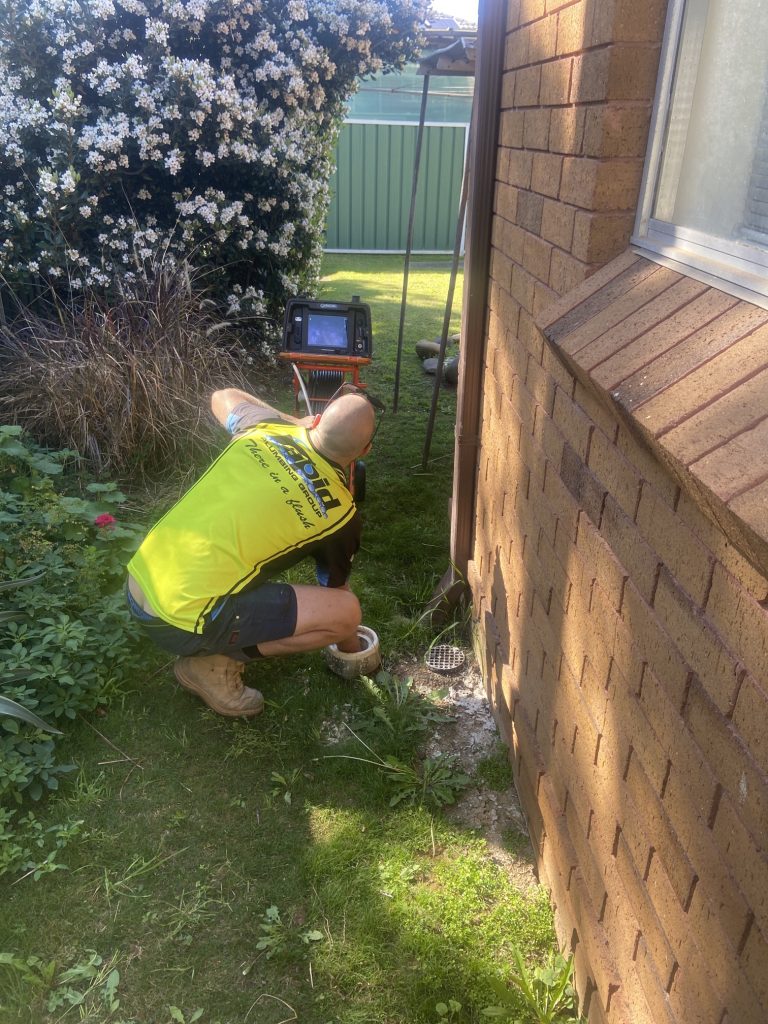
Dry weather pooling sounds confusing, but it’s actually one of the best early warning signs you can catch. Most people only notice drains when it rains. But if water appears when it hasn’t rained, that often means the issue is happening steadily and quietly—like a slow leak or a slowly forming blockage.
Below are the most common causes we see, plus the real plumbing services we use to confirm and fix them.
1) A partial blockage is slowing the drain (the most common cause)
A stormwater line doesn’t need to be fully blocked to cause pooling. Imagine a straw with a bit of mud inside—water will still pass through, but it will be slow. That’s exactly what happens with a partial blockage.
What causes partial blockages?
Outdoor drains collect more than water. They also collect:
- Fine dirt and sand washed off paths
- Leaf litter and seed pods
- Mulch and bark
- Small stones and construction debris
- Sludge that builds up inside older pipes
Over time, this debris can settle and form a “dam” inside the pipe. Then even light water flow—like from a garden hose or sprinkler—can back up at the grate.
How we fix it (real services we use)
At Local Blacktown Plumber, we typically handle partial stormwater blockages using:
- CCTV drain camera inspections to locate the exact restriction
- High-pressure water jetting to clear sludge, sand, and debris properly
- Drain and stormwater cleaning to flush the line end-to-end
- Stormwater pit clean-outs where build-up is heavy inside the pit
This is the proper approach because simply scooping leaves out of the grate only clears what you can see—not what’s blocking the pipe deeper down.
2) Your irrigation system is feeding the puddle (even if you don’t notice it)
A lot of “mystery puddles” come from irrigation. Many sprinklers are set to run early in the morning, so you may never actually see them running. If a sprinkler sprays toward the drain area, water can keep wetting the spot daily—even in the middle of a dry week.
Signs irrigation is involved
- Pooling happens at a similar time each day
- The area stays damp even in hot weather
- You see moss, algae, or slippery build-up near the grate
- The soil around the drain feels soft and constantly wet
How we help (real services we provide)
While irrigation is not always a “plumber job,” the effects often become one—because the extra water can trigger blockages, soil movement, or pipe failures. We can help by:
- Checking whether the drain is coping properly through stormwater testing
- Performing CCTV inspections to see if constant water flow is carrying soil into the line
- Doing blocked drain clearing if irrigation water is pushing debris into the system
- Providing leak detection if drip lines or buried supply lines may be leaking
If your drain is already partially blocked, even a normal irrigation cycle can cause pooling around the grate.
3) A downpipe is discharging near the grate (or leaking underground)
Downpipes can connect to stormwater pipes or discharge to the surface near a drain. If a downpipe is cracked, loose, or leaking at a connection point, it can send water into the ground—creating damp patches and pooling around the nearest low point (often the drain pit).
What to look for
- Wet soil near the base of a downpipe
- Water staining on brickwork or render
- A constant trickle, even without rain
- Pooling after washing the car or hosing the area
How we fix it (real services we provide)
This is where our general plumbing and stormwater skills overlap. We can:
- Repair or replace downpipe connections to stormwater
- Re-seal or re-join broken joints
- Inspect the stormwater run via CCTV camera
- Clear any downstream build-up using water jetting
- Perform leak detection if the problem is not visible but the ground stays wet
For homes needing residential plumbing in penrith, this is a big one—because older pipe joins and shifting ground can slowly pull fittings apart.
4) The pipe has poor “fall” (slope), so water sits in the line
Stormwater relies on gravity. Pipes must have enough “fall” (downward slope) so water moves efficiently. If the slope is too flat—or the pipe has sagged—water can pool inside the line, leading to slow draining and surface pooling at the grate.
Why fall problems happen
- Ground settles over time
- Tree roots push pipes upward
- Heavy vehicles compress soil near driveways
- Poor installation or aging infrastructure
How we diagnose and fix it (real services we use)
At Local Blacktown Plumber, we identify fall issues using:
- CCTV drain inspection (you can literally see standing water and low spots)
- Testing with controlled water flow to observe drainage speed
- Targeted excavation if needed to repair the affected section
Fixes may include:
- Re-laying sections of stormwater pipe with proper fall
- Repairing or replacing sagging sections
- Improving surface drainage so water naturally runs into the grate properly
5) Tree roots are cracking or squeezing the stormwater line
Tree roots search for moisture. If stormwater pipes have joints, tiny gaps, or cracks, roots can enter the pipe. Once inside, they grow like a net, catching debris and causing repeated slow drainage.
Clues tree roots are the cause
- The problem worsens gradually over months
- Blockages return soon after “basic clearing”
- Nearby trees or shrubs have strong root systems
- You see fine roots inside the pit or near pipe openings
How we deal with roots (real services we provide)
We handle root-related stormwater problems with:
- Drain camera inspections to confirm root intrusion
- High-pressure water jetting to clear roots and debris
- Tree root removal services for stormwater and drains
- Repairs to damaged pipe sections to prevent regrowth
- Ongoing maintenance recommendations if the area is root-prone
If your drain blocks repeatedly, the camera is the key. It saves time, money, and guesswork.
6) The grate or pit is sitting too low (or surrounding ground levels are wrong)
Sometimes the drain system is fine—but the surface around it is not. If paving settles, soil shifts, or landscaping changes the ground height, water can flow toward the pit but still pool because the surface levels don’t guide it into the grate properly.
Signs this is the issue
- Pooling occurs only on the surface
- The pit drains fine once water enters
- Paving has dipped or shifted near the drain
- The grate sits unevenly or rocks when stepped on
How we help (real services related to this issue)
While surface levelling may involve landscaping or concreting, we still support the plumbing side by:
- Confirming the drain and stormwater line are flowing correctly
- Clearing any partial blockage so water doesn’t “back up” at the entry
- Adjusting pit connections if needed
- Advising whether drainage redesign is required to prevent future pooling
7) There’s a hidden leak nearby (tap, water line, pool line, or gas-related issue)
If pooling continues even when irrigation is off and there’s no hose use, a hidden leak becomes more likely. Leaks can keep soil wet and make the area around a drain look like it’s “holding water.”
Common hidden leak sources
- Outdoor tap or hose bib leaks
- Cracked buried water supply line
- Pool plumbing leaks or backwash issues
- A/C condensate line draining to the wrong spot
- Shower or bathroom leaks travelling underground (yes, it can happen)
How we confirm leaks (real services we provide)
This is where professional tools matter. At Local Blacktown Plumber, we use:
- Water leak detection methods (pressure testing and targeted checks)
- Inspections and testing to confirm whether the water is from plumbing supply lines
- Repairs to taps, valves, and fittings
- If needed, we can also assist with gas leak detection (different issue, but important for safety)
If you suspect a leak, don’t wait—hidden water leaks can cause erosion, foundation issues, and higher water bills.
Is it stormwater or sewer? A quick safety check
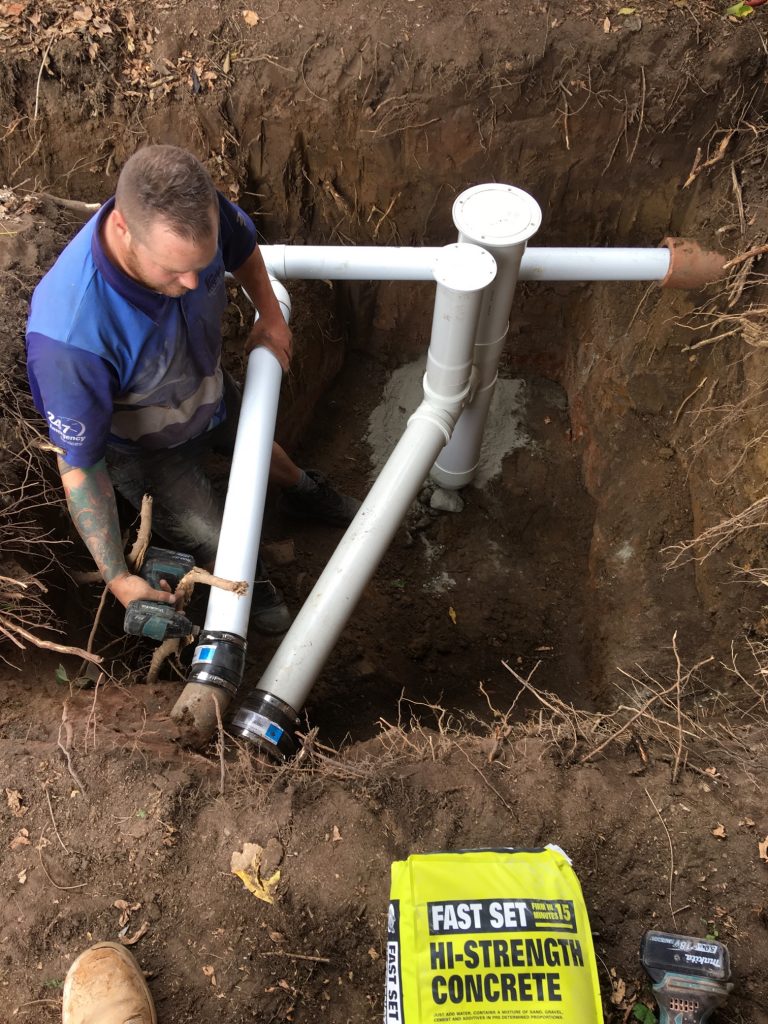
Outdoor drain grates are usually stormwater. But if the water smells bad, looks dirty, or appears after using toilets or showers, it may be connected to sewer or overflow systems.
Warning signs of sewer-related problems
- Strong unpleasant smell
- Grey or brown water
- Toilet paper residue
- Overflow after using indoor plumbing
If you see these signs, call a plumber immediately. We offer 24/7 emergency plumbing, which is important for health and safety.
What you can safely do at home (without causing damage)
Here are safe steps you can try before calling us—especially if the pooling is minor and has no smell.
Step 1: Clear what you can see
- Remove leaves, mud, and debris around the grate
- Ensure the grate openings are not blocked
Step 2: Do a bucket test
Pour a bucket of water into the pit:
- If it drains quickly, the pipe is likely flowing
- If it rises or drains slowly, there’s likely a blockage or fall issue
Step 3: Turn off irrigation for 24 hours
If pooling stops, irrigation overspray or a leak may be involved.
Avoid these DIY mistakes
- Don’t use harsh drain chemicals outdoors
- Don’t jam objects down the pipe
- Don’t ignore repeated pooling—it usually gets worse
How we fix it properly (the “no guesswork” approach)
When you call Local Blacktown Plumber, we focus on solving the cause—not just the symptom.
Our most effective services for this issue include:
- CCTV drain camera inspections (to locate blockages, roots, cracks, and low spots)
- High-pressure water jetting (to clear sludge, dirt, and debris thoroughly)
- Blocked drain clearing and repairs (including tree root removal)
- General plumbing inspections and testing (to rule out leaks)
- Leak detection for water, pool, shower, and gas-related issues
- Stormwater pipe repairs or replacements if damage is confirmed
This approach is especially important for homeowners managing residential plumbing in penrith, where repeat drainage issues can be common due to trees, soil movement, and heavy outdoor use.
Why fixing dry-weather pooling early saves money
A “small puddle” can lead to:
- Slippery surfaces and falls
- Mosquito breeding
- Erosion under paving or paths
- Sinkholes or soft spots in soil
- Ongoing blockages that become emergencies
Catching the problem early can mean a quick jet clean instead of a major repair later.
Prevention tips that actually work (simple habits)
- Keep leaves and mulch away from grates weekly
- Don’t sweep soil or sand toward drains
- Check downpipes and overflow points regularly
- Adjust sprinklers so they don’t overspray onto pits
- Book a camera inspection if the issue repeats more than once
FAQs: Water pooling around outdoor drain grates
Why does it happen more in dry weather than during rain?
In rain, water may spread out more evenly. In dry weather, smaller but constant sources (sprinklers, leaks, hose use) can expose slow drainage problems.
Can a stormwater drain block without rain?
Yes—debris builds up over time, and it only takes a little water to trigger visible pooling.
What’s the fastest way to know the real cause?
A CCTV drain camera inspection. It shows the exact location and type of problem.
Is this an emergency?
Not always. But if the water smells bad, looks dirty, or worsens quickly, call immediately. We offer 24/7 emergency plumbing.
Call Local Blacktown Plumber for help today (Penrith-area homes included)
If you’re noticing water pooling around an outdoor drain grate in dry weather, don’t ignore it. At Local Blacktown Plumber, we provide complete solutions for residential plumbing in penrith, including:
- 24/7 emergency plumbing
- General plumbing repairs and installations (taps, toilets, showers, inspections and testing)
- Blocked drain clearing and repairs (water jetting, drain/sewer cleaning, CCTV camera inspections, tree root removal)
- Hot water system supply, installation, servicing, and repairs (gas, electric, instant, heat pumps, solar, commercial)
- Gas fitting and gas plumbing (appliance installs, repairs, gas leak detection)
- Leak detection (water, shower, pool, and gas)
- Water filtration solutions
📞 Call Local Blacktown Plumber now: 291583589
We’ll find the real cause, explain your options clearly, and get your outdoor drainage working properly—so you can avoid bigger repairs later.