Blocked Drains Blacktown: Why Kitchen Grease Is the Most Expensive Habit
| Quick answer: Kitchen grease is one of the leading causes of blocked drains in Blacktown homes because fats and cooking oils go down the sink as a warm liquid, then cool and harden against the inside of the pipe. Each wash adds another layer, narrowing the line until food scraps, coffee grounds and soap scum get caught and form a solid plug. The habit feels harmless at the time, but it usually ends in a hydro jetting call, a CCTV drain inspection, or in older properties a damaged section of pipe. Pouring fat into a jar instead of the sink is the cheapest plumbing decision you will ever make. |
On this page
- What actually happens when grease goes down the sink
- Why Blacktown drains are especially unforgiving
- Why it becomes the most expensive habit in the house
- Warning signs your kitchen line is already coated
- What to do with cooking fat instead
- How a plumber clears a grease-blocked drain
- When grease is not the whole story
- Frequently asked questions
The habit nobody thinks twice about
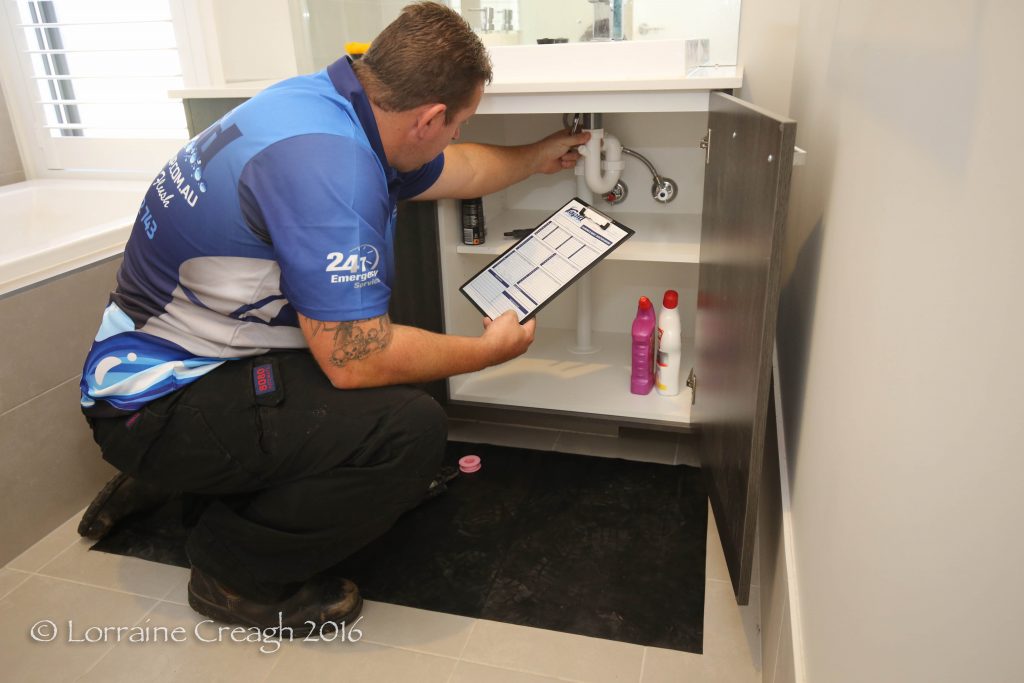
It is Sunday night, the roasting tray is sitting in the sink, and there is a centimetre of hot fat pooled in the bottom. You run the tap, watch it swirl away, and think nothing more about it. Six months later the sink is draining slowly, there is a smell you cannot place, and you are searching for someone to fix blocked drains in Blacktown on a Saturday morning. Those two moments are the same event, separated by enough time that most people never connect them.
Grease is the quiet troublemaker of residential plumbing. It does not announce itself the way a tree root or a lost toy does. It accumulates, and because it accumulates slowly, by the time it causes a problem it is rarely a simple one.
What actually happens when grease goes down the sink
Cooking fat leaves the pan hot, and at that temperature it behaves like water: thin, mobile, happy to travel. Your drain line is not hot. It runs under the slab and out through the yard, where the soil sits at a stable and much cooler temperature. Within a metre or two of leaving the sink, that fat drops below its melting point and reverts to what it really is, which is a soft solid. It sticks to the pipe wall, usually at a bend or a junction where the surface is not perfectly smooth, and then it waits.
What makes grease so destructive is that it is adhesive. Once the first coating is down, everything else that comes past has something to grab onto: rice and pasta that swell with water, coffee grounds, egg shell fragments, stringy vegetable matter, and soap scum that binds with fats. Individually, none of these would block a healthy pipe. Glued into a greasy matrix, they form the domestic version of what water utilities call a fatberg. The pipe does not fail so much as it gets narrower and narrower, until one ordinary evening of dishes tips it over the edge.
There is a common belief that plenty of hot water and dishwashing liquid will carry the fat safely away. Detergent does emulsify fat, but only while the water stays hot and moving. Once it cools further down the line, the emulsion breaks and the fat separates out again, now further from the sink and further from the easiest access point when a plumber has to clear it.
| Still working out whether your slow sink is a grease problem or something bigger? Our guide to the telling signs of blocked drains runs through the symptoms worth paying attention to, so you can tell the difference between a nuisance and a warning before you decide what to do next. |
Why Blacktown drains are especially unforgiving
Grease behaves the same way everywhere, but local conditions decide how quickly it turns into a callout, and a few things about the Blacktown area stack the odds.
Older pipework. Plenty of homes across Blacktown were built when vitrified clay and early PVC were standard. Clay interiors are not glass smooth, and decades of ground settlement can leave joints slightly offset. Every rough edge gives grease a ledge to build from. Newer estates around Marsden Park and The Ponds have smoother pipework, but even there a tight bend will collect fat over time.
Long drain runs. Detached homes on generous blocks mean more distance between the kitchen and the sewer connection, so more time for fat to cool and more surface area for it to cling to. It also means that when something does block, the problem can sit well out in the yard rather than conveniently under the sink.
Why it becomes the most expensive habit in the house
Calling grease expensive is not about one plumbing invoice. It is about the way the cost compounds. A blockage caught early is often a straightforward clear. Left alone, the same line tends to progress through stages, each more involved than the last:
- Slow drainage. Annoying, easily ignored, and the cheapest possible moment to act.
- Full blockage. Now it is urgent, often at an inconvenient hour, and it may need machine clearing.
- Recurring blockages. The line has been cleared but the hardened residue and its underlying cause remain, so it keeps coming back.
- Overflow. Wastewater backs up into the sink, the floor waste or the yard, bringing cleanup, possible damage to flooring or cabinetry, and a genuine hygiene issue.
- Pipe damage. Repeated mechanical clearing of an already compromised clay line can turn a maintenance job into an excavation and repair job.
Most households only see the first stage, and they see it as an inconvenience rather than a bill in progress. That is the trap. For a cafe or takeaway shop the maths is more obvious, since a blocked kitchen line means closing the kitchen, which is why commercial plumbing customers in Blacktown treat grease management as scheduled maintenance. The lesson transfers neatly to home kitchens.
Warning signs your kitchen line is already coated
Grease buildup gives you plenty of notice if you know what to look for:
- Water that hesitates. The sink drains, but there is a pause before it starts, or a slow final swirl at the end.
- Gurgling. Air struggling past a partial obstruction makes a distinct sound, often heard in the next sink along or in the floor waste.
- A sour, faintly rancid smell. Rotting fat has a specific odour, different from general drain smell, and it usually gets stronger in warm weather.
- Blockages that return to the same spot. If you clear it and it comes back in the same place three months later, something structural is holding the grease there. A repeating blockage in one location usually points to a joint or a bend rather than to bad luck.
- The dishwasher backing up into the sink. A shared line that cannot cope with the discharge volume is often a restricted line.
Any one of these is worth noting. Two or more together generally means the pipe has already lost a meaningful amount of its diameter.
| Not sure whether to watch it or act on it? A CCTV drain inspection removes the guesswork, showing how much of the pipe is left and whether the buildup is sitting on top of a cracked joint or a root intrusion. Local Blacktown Plumber can talk you through what a camera inspection would show in your situation. See our blocked drain services in Blacktown for what is involved. |
What to do with cooking fat instead
The fix is genuinely low effort, which is the frustrating part. Prevention here costs nothing but a change of habit.
Keep a jar by the stove. Pour cooled fat into an old jar or tin, let it solidify, and bin it when it is full. Bacon fat, roast drippings, frying oil and the residue from browning mince all go the same way.
Wipe before you wash. Pans, trays and plates get a wipe with paper towel before they hit the sink. This removes most of the fat before water is ever involved, and it beats anything you can do afterwards.
Use the sink strainer properly. A fine mesh strainer catches the solids that grease binds to. Empty it into the bin, not down the drain.
Two popular fixes are worth being sceptical about. A kettle of boiling water softens fat temporarily, but it mostly relocates the deposit further along the line, and repeated boiling water on older connections and seals is not ideal. Caustic drain cleaners can burn through soft buildup, but they struggle with an established grease layer and can sit against a partial blockage damaging older pipework while they do it. If a product has not worked once, more of it is not the answer.
For a routine that covers the whole property rather than just the kitchen, our guide on how to prevent blocked drains in Blacktown sets out what is worth doing seasonally.
How a plumber clears a grease-blocked drain
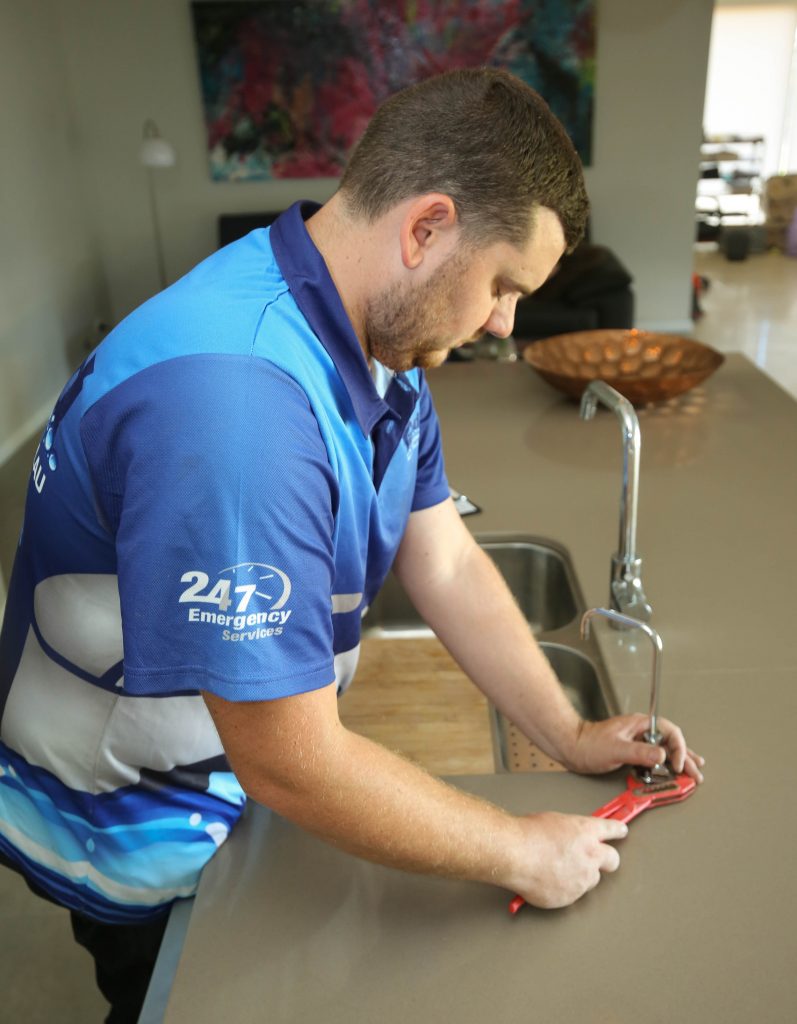
When prevention has come too late, the approach depends on what is actually in the pipe, which is why diagnosis comes first. A CCTV camera shows where the blockage is, how much pipe diameter is left, and whether there is an underlying defect such as a cracked section, a displaced joint or root intrusion. Clearing a blockage without understanding why it formed there generally buys a few months rather than a fix.
For grease specifically, high pressure water jetting is the usual answer. A mechanical cutter punches a hole through the middle of an obstruction, and on a fat-coated line that hole closes up again fairly quickly. Jetting scours the full internal surface of the pipe and flushes the residue away. An electric eel still has its place where roots or a solid obstruction are involved, often to open a path first with jetting following behind it.
If the camera shows the grease has been collecting because of a structural fault, clearing alone is not the end of it. Depending on the defect, that might mean repairing a section of line or relining it. A plumber should be able to explain what the camera showed and why a repair is or is not being recommended before any work is agreed.
Once it has gone past slow drainage and into an active overflow, it becomes urgent. That is what emergency plumbing in Blacktown exists for, and it is far better dealt with at the first backup than after wastewater has reached the floor.
When grease is not the whole story
It would be convenient if every blocked kitchen drain came down to cooking fat, but grease is often the accomplice rather than the ringleader.
Tree roots are the classic Blacktown offender. Established trees in older streets send fine roots toward any moisture source, and a hairline crack or a slightly open joint is invitation enough. Once roots are inside the pipe they act like a net, and grease is exactly what that net catches. Pipe sag, foreign objects and poorly graded original installations do much the same job. If your blockages follow a seasonal pattern or you have mature trees near the line, it is worth reading about tree roots and blocked drains in Blacktown and the signs that give them away.
Key takeaways
- Grease enters the drain as a liquid and hardens within metres, coating the pipe rather than flushing through it.
- Detergent and hot water only postpone the deposit, they do not remove it.
- Older clay pipework and long drain runs make fat buildup a faster problem in Blacktown than it is elsewhere.
- Slow drainage, gurgling, sour smells and repeat blockages in one spot are all early signals.
- A jar by the stove and a wipe before washing prevents most of it at no cost.
- Hydro jetting after a camera inspection is the usual professional fix, because it cleans the pipe wall rather than punching through the middle.
Frequently asked questions
Can I pour grease down the drain if I run hot water at the same time?
Not safely. Hot water keeps the fat liquid for the first stretch of pipe, but the line cools quickly underground and the fat solidifies further along. All you achieve is moving the deposit somewhere less accessible, which tends to make the eventual clearing job harder rather than easier.
How often do blocked drains in Blacktown need professional clearing?
There is no fixed schedule that suits every property. Homes with mature trees near the drain line, older clay pipework or a history of blockages often benefit from periodic preventative jetting, while a newer home with careful kitchen habits may go years without needing anything. If you have had two blockages in the same line within a year, that is usually the point at which an inspection is worth it.
Do enzyme or bacterial drain treatments actually work on grease?
Biological treatments can help maintain a line that is already reasonably clear by breaking down thin organic residue over time. They are a maintenance product, not a rescue product. They will not clear an established blockage, and using them in place of clearing an existing problem generally just delays the call.
Is a slow kitchen sink always caused by grease?
No. A slow sink can come from a blocked P-trap, a partially obstructed branch line, a venting issue, or a problem further downstream that happens to show up first at the kitchen. Grease is a very common cause in kitchens specifically, but the only way to be certain is to look at what is in the pipe.
Who is responsible for a blocked drain in a Blacktown rental property?
In general terms, landlords are responsible for the condition and maintenance of the plumbing, while tenants are responsible for blockages caused by misuse, which can include putting fat and food waste down the sink. Where the line is old or roots are involved, it usually sits with the owner. Tenancy arrangements vary, so it is worth checking the specific agreement and, where the cause is disputed, having a camera inspection document what is actually in the pipe.
Get it sorted before it becomes a bigger job
| Blocked drain in Blacktown? Call Local Blacktown Plumber on (02) 9158 3589.
We are a local, family owned team working across Blacktown and the surrounding suburbs, from Seven Hills and Lalor Park through to Doonside, Marayong and Kings Langley. Whether your sink has slowed to a trickle or wastewater is already backing up, we can inspect the line, clear it properly and tell you honestly whether there is an underlying fault behind it. Call (02) 9158 3589 or get in touch with our Blacktown team, and you can also check the full list of areas we service around Blacktown. |