Blocked Drains in Blacktown: Warning Signs You Shouldn’t Ignore
Quick answer: The most common warning signs of blocked drains in Blacktown are slow-draining sinks and showers, gurgling noises, unpleasant drain smells, water backing up into other fixtures, toilets that struggle to flush, and water pooling around outdoor drains or overflow gullies. A single slow fixture may indicate a local blockage, while several affected fixtures can point to a blockage deeper in the main sewer line. Acting early can often prevent sewage overflows, water damage and a more expensive plumbing repair.
What’s in this guide
- The first warning signs of a blocked drain
- Which symptoms mean the blockage is getting worse
- How to tell whether one drain or the main sewer line is affected
- Why Blacktown drains commonly become blocked
- When a blocked drain becomes an emergency
- How plumbers diagnose the real cause
- What to do when you notice the warning signs
- How to reduce the risk of another blockage
- Frequently asked questions
Blocked Drains Usually Give You Warning First
A completely blocked drain can feel like it happened without warning.
One minute the kitchen sink seems fine. The next, water refuses to disappear. Or you flush the toilet and notice water rising through the shower drain.
But most blocked drains don’t develop overnight.
The pipe usually becomes narrower gradually as grease, hair, soap residue, wipes, tree roots or other material collects inside it. As the opening becomes smaller, wastewater takes longer to escape and pressure begins building through the drainage system.
That’s when the warning signs start.
Recognising those signs early can make the difference between clearing a developing blockage and dealing with an overflowing toilet, flooded bathroom or sewage backing up around the property.
1. Water Is Draining More Slowly Than Usual
Slow drainage is one of the earliest and easiest warning signs to recognise.
You might notice:
- water sitting in the kitchen sink after washing dishes
- the shower base filling while you’re showering
- the bathroom basin taking longer to empty
- water remaining around a floor waste
- an outdoor drain taking longer to clear after rain
A slightly slow drain may not seem urgent, but it usually means something is beginning to restrict the pipe.
If only one fixture is affected, the blockage may be close to that particular sink, shower or basin.
If several fixtures start draining slowly at the same time, the restriction may be further along the drainage system.
Our guide on localised blockages when only one sink is blocked explains the difference in more detail.
2. You Hear Gurgling or Bubbling From the Drains
Your drains shouldn’t normally make loud bubbling or gurgling noises.
When a pipe becomes partially blocked, wastewater may struggle to move past the obstruction. Air trapped inside the drainage system can then be pushed or pulled through nearby fixtures.
That can create sounds such as:
- gurgling from the kitchen sink
- bubbling from the toilet
- noises from the shower drain when another fixture is used
- gurgling after the washing machine empties
Pay particular attention when one fixture reacts to another.
For example, if the toilet bubbles whenever the washing machine drains, the problem probably isn’t limited to the washing machine itself. Several fixtures may be sharing a partially restricted drain.
3. Bad Smells Are Coming From the Drain
A persistent sewage or rotten smell should not be ignored.
Wastewater is designed to move through the drainage system and away from the property. When material becomes trapped inside a pipe, organic waste can start sitting there instead.
That can produce unpleasant smells around:
- kitchen sinks
- bathroom basins
- shower wastes
- floor drains
- toilets
- outdoor gullies
A kitchen drain may smell because food particles and grease are decomposing inside the pipe.
A stronger sewage-like smell from several drains can indicate a problem further down the drainage system.
If the smell returns shortly after cleaning the fixture, it’s worth investigating the pipe rather than repeatedly masking the odour.
4. Water Is Coming Back Up Through Another Drain
This is one of the clearest signs that a blockage has progressed.
You may flush the toilet and see water move inside the shower.
You might empty the kitchen sink and hear bubbling from a nearby floor waste.
Or the washing machine may discharge and cause water to rise through another drain.
This happens because wastewater cannot travel freely through the normal route. It starts looking for another available opening.
When several fixtures interact like this, the blockage is often deeper than a simple sink or shower clog.
| Seeing more than one warning sign? Our blocked drain services in Blacktown explain how plumbers locate and clear different types of drainage blockages before they develop into overflows. |
5. Your Toilet Is Becoming Harder to Flush
Not every slow toilet means there’s a major sewer blockage.
But changes in how your toilet flushes can provide an early warning.
Watch for:
- water rising unusually high before draining
- the bowl taking longer to empty
- weak flushing
- bubbling after flushing
- the water level repeatedly changing
- needing to flush twice
If the toilet is the only affected fixture, the blockage may be close to the toilet.
If the toilet, shower and floor drain are all showing symptoms, the main drainage line becomes a stronger possibility.
6. Water Is Pooling Around an Outdoor Drain or Gully
External drains often provide some of the most obvious warning signs.
You might notice water:
- sitting over a stormwater grate
- pooling near an overflow relief gully
- appearing beside an external drain
- spreading across a paved area
- taking unusually long to disappear after rain
Leaves, soil, sediment and other debris can restrict outdoor drainage.
Heavy rainfall can also expose a drainage problem that wasn’t obvious during dry weather because a partially restricted pipe suddenly has to handle much more water.
If problems mainly occur during storms, read our guide to blocked drains after heavy rain.
7. The Same Drain Keeps Blocking
A blockage that repeatedly returns deserves more attention than a one-off clog.
If you’ve already plunged, cleaned or professionally cleared the same drain and the problem keeps coming back, there may be something inside the pipe that clearing alone cannot fix.
Possible causes include:
- tree roots entering through a damaged joint
- cracked pipework
- a displaced pipe connection
- a low or damaged section of pipe
- heavy internal build-up
- an obstruction repeatedly catching waste
The location of the blockage is often an important clue.
If it keeps forming in exactly the same section of pipe, there may be a physical defect creating a permanent snag point.
Our guide to recurring blockages at a pipe joint or bend explains why repeat blockages often need more than another quick clearing.
8. Sewage or Dirty Water Is Starting to Surface
This is no longer an early warning sign.
It’s an urgent one.
Wastewater may surface:
- through a shower drain
- around a floor waste
- from a toilet
- around an outdoor gully
- in the yard near the drainage line
Once sewage is backing up or overflowing, stop using unnecessary plumbing fixtures where possible and arrange professional help.
Continuing to run taps, showers, toilets, washing machines or dishwashers can send even more wastewater toward a pipe that is already unable to carry it away.
What Different Warning Signs Can Tell You
The pattern of symptoms can help narrow down where the blockage may be.
| What you’re noticing | What it may indicate |
| One sink draining slowly | Localised blockage near that fixture |
| Shower draining slowly | Hair or soap build-up in the bathroom waste |
| Kitchen sink smells and drains slowly | Grease or food build-up |
| Toilet bubbles when another fixture drains | Restriction deeper in the shared drainage line |
| Several fixtures drain slowly | Possible main drain blockage |
| Outdoor drain overflows after rain | Stormwater restriction or debris |
| Same drain blocks repeatedly | Possible pipe damage, roots or structural issue |
| Sewage backing up indoors | Serious blockage requiring urgent attention |
These are useful indicators, but the only way to know exactly what’s inside a buried drain is to inspect the line properly.
What’s Usually Behind the Warning Signs?
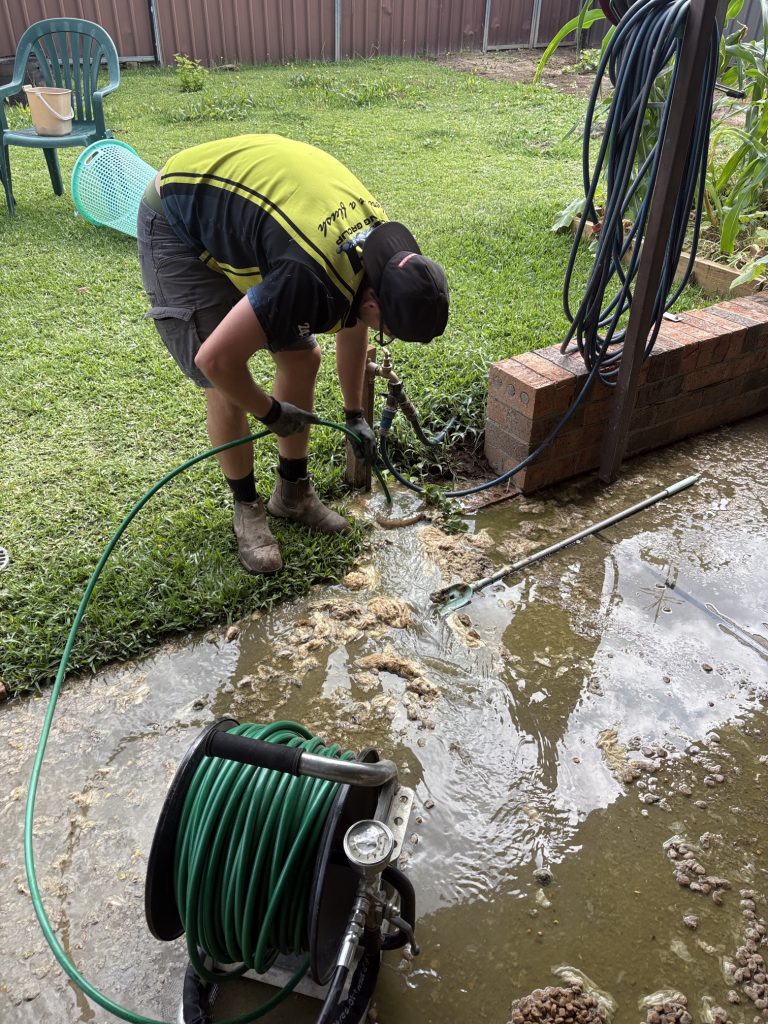
Once symptoms start appearing, the next question is what’s causing them.
Grease and food waste
Kitchen grease enters the drain as a liquid but can cool and stick to the inside of the pipe.
Food scraps and other particles then attach to the greasy surface, gradually narrowing the available opening.
Hair and soap residue
Hair can collect around traps and pipe joints.
Soap residue attaches to it, creating a mass that restricts shower and bathroom drains.
Wet wipes and other non-flushable items
Toilet paper is designed to break down quickly in water.
Many other products are not.
Wipes, sanitary products, paper towel, cotton buds and similar items can remain intact long enough to catch inside the drainage system and form a larger obstruction.
Tree roots
Tree roots can enter drainage pipes through cracks or deteriorated joints where moisture is available.
Once inside, they continue growing and catch toilet paper and other waste flowing through the pipe.
If you suspect this may be happening, see the warning signs of tree roots in Blacktown drains.
Damaged drainage pipes
A cracked, displaced or deteriorated pipe can interfere with normal wastewater flow.
Damage can also create rough sections where waste repeatedly catches, which is why some blockages return soon after being cleared.
Leaves, soil and storm debris
Outdoor drainage has a different set of problems.
Leaves, bark, soil and sediment can collect inside grates, pits and stormwater pipes. During heavy rain, that material can be pushed further into the system and create a restriction.
Why It’s Better to Act at the Warning Stage
Ignoring a slow drain for another few weeks may seem harmless.
The problem is that a partially blocked pipe can become completely blocked without much additional material.
Once that happens, the consequences can include:
- overflowing toilets
- sewage entering showers or bathrooms
- wastewater surfacing outdoors
- unusable sinks or toilets
- water damage
- unpleasant odours
- emergency plumbing costs
Early diagnosis can also reveal whether you’re dealing with ordinary build-up or something more significant, such as root intrusion or damaged pipework.
That matters because simply clearing the pipe won’t permanently solve a structural problem.
How a Plumber Finds the Cause
A professional blocked drain service usually involves more than simply pushing something down the pipe.
Step 1: Check which fixtures are affected
The symptoms help determine whether the problem is likely to be localised or deeper inside the drainage system.
Step 2: Access the drainage line
The plumber may use an inspection opening, gully or another suitable access point to reach the affected section.
Step 3: Inspect the pipe with a CCTV drain camera
A drain camera allows the inside of the pipe to be inspected directly.
Depending on the problem, the footage may show:
- grease deposits
- debris
- foreign objects
- tree roots
- cracks
- displaced joints
- damaged pipe sections
This helps avoid repeatedly clearing the same blockage without understanding why it formed.
Step 4: Clear the obstruction
Depending on the blockage, plumbers may use equipment such as an electric drain machine or high-pressure water jetter.
A drain machine can break through many common obstructions, while water jetting can clean built-up material from around the internal pipe wall.
Step 5: Check for damage
If the blockage was caused by roots or pipe damage, another camera inspection can help determine whether repairs are needed.
Depending on the condition and location of the pipe, repair options may include relining or replacing the damaged section.
| Had the same drain cleared before? Ask about a CCTV inspection before paying for another temporary fix. Our general plumbing services cover diagnosis and repairs, or you can contact us for a free quote. |
What Should You Do When You Notice the Signs?
A minor localised blockage may sometimes be manageable at home.
You can:
- remove visible hair or debris from the drain opening
- clean the sink or shower strainer
- use a plunger on a simple local blockage
- clear leaves from outdoor grates
- stop putting grease, food scraps or wipes into drains
But stop DIY attempts if:
- several fixtures are affected
- sewage is backing up
- the blockage keeps returning
- water is coming through another fixture
- an outdoor gully is overflowing
- you suspect tree roots
- plunging isn’t improving the problem
Avoid repeatedly pouring harsh chemical drain cleaners into a seriously blocked pipe. If the chemical fails to clear the obstruction, it remains inside the line and can make later plumbing work more hazardous.
How to Reduce the Risk of Another Blocked Drain
Once the drain is flowing properly again, a few habits can significantly reduce future problems.
- Keep cooking fats, oils and grease out of the sink.
- Scrape food scraps into the bin before washing dishes.
- Use strainers over kitchen and shower drains.
- Remove collected hair regularly.
- Put wipes and sanitary products in the bin rather than the toilet.
- Keep gutters and outdoor drainage grates clear.
- Deal with recurring drainage problems instead of repeatedly treating the symptoms.
- Consider a camera inspection where an older drain repeatedly develops root problems or blockages.
You can find more practical tips in our guide to preventing blocked drains in Blacktown.
Key Takeaways
- Slow drainage is often the first sign that a blockage is developing.
- Gurgling, bubbling and bad smells indicate that wastewater or air is no longer moving normally through the pipe.
- One affected fixture usually points to a more localised problem.
- Multiple affected fixtures can indicate a blockage deeper in the drainage system.
- Water backing up through another drain should be addressed quickly.
- Sewage overflowing indoors or outdoors should be treated as urgent.
- A blockage that repeatedly returns may indicate tree roots, damaged pipework or another structural problem.
- CCTV drain inspections can help identify the actual cause instead of relying on guesswork.
| Blocked drain getting worse? Don’t wait until wastewater starts overflowing. Local Blacktown Plumber is a family-owned team servicing Blacktown and surrounding suburbs, with free quotes, honest pricing and 24/7 emergency plumbing when the problem can’t wait until morning. Call (02) 9158 3589 to have the cause located and the drain properly cleared. |
Frequently Asked Questions
What are the first signs of a blocked drain?
Slow drainage is usually the earliest sign. You may also notice gurgling sounds, unpleasant smells, water levels changing in the toilet or water appearing in another fixture when a drain is used.
How do I know if the main drain is blocked?
A main drain blockage often affects several fixtures at the same time. Toilets, showers, sinks and floor drains may all drain slowly, gurgle or cause water to back up through one another.
Is a gurgling drain a serious problem?
Occasional noise isn’t always serious, but repeated gurgling can indicate that air is struggling to move through a partially restricted drainage line. If it’s happening alongside slow drainage or multiple affected fixtures, the drain should be checked.
When is a blocked drain an emergency?
Treat it as urgent if sewage is backing up inside the property, an overflow gully is overflowing heavily, you have no usable toilet, or wastewater is spreading through bathrooms or living areas.
Why does my drain smell even though it isn’t completely blocked?
A partial blockage can trap grease, food, hair or other organic material inside the pipe. Wastewater may still pass through, but the trapped material can produce unpleasant smells before the drain becomes fully blocked.
Why does my toilet bubble when I use the shower or washing machine?
The fixtures may share part of the same drainage system. A restriction further down the pipe can trap air, causing it to escape through the toilet when wastewater from another fixture enters the line.
Why does my blocked drain keep coming back?
Repeat blockages can indicate something more than ordinary build-up. Tree roots, cracked pipes, displaced joints or damaged sections of drainage can repeatedly catch waste until the underlying problem is repaired.
Should I use chemical drain cleaner on a blocked drain?
Chemical cleaners may sometimes affect minor build-up, but they often don’t solve deeper obstructions such as roots, wipes or damaged pipework. For a recurring, completely blocked or multi-fixture drainage problem, proper diagnosis and mechanical clearing are safer options.