Leaking Pipes in Blacktown? When to Call Your Local Plumber
| Quick answer: Call a plumber in Blacktown straight away if water is spraying, pooling, or running when every tap in the house is off, if you can see wet patches on walls or ceilings, or if your water bill has jumped with no change in how much water you use. A slow drip under a sink can usually wait until the next business day. Anything involving a burst line, a hot water system, or water near electrical fittings is an emergency, and the water should be shut off at the meter before help arrives. |
What this guide covers
- The signs that a pipe is leaking, including the ones you cannot see
- Why leaks are common in Blacktown homes
- Leaks that can wait, and leaks that cannot
- What to do in the first ten minutes
- How a plumber finds and fixes a hidden leak
- How to reduce the odds of the next leak
- Frequently asked questions
Introduction
Most leaking pipes do not announce themselves. There is no dramatic burst, no flooded hallway. There is a faint musty smell in the laundry, or a patch of paint that looks slightly darker than the rest of the wall, or a water bill that is higher than the last one for no reason you can explain. By the time the problem is obvious, water has usually been moving through the building for weeks.
That is the frustrating part of a leak. The damage is rarely caused by the volume of water. It is caused by how long the water was there before anyone noticed. A pinhole behind a wall cavity can quietly soak a stud, lift a skirting board, and feed mould growth long before you would think to call a plumber in Blacktown.
This guide is about the judgement call in the middle: which leaks genuinely need a plumber today, and which can wait for a scheduled appointment. Getting that right saves you money in both directions, on callouts you did not need and on repairs that got worse because they waited.
How to tell you actually have a leaking pipe
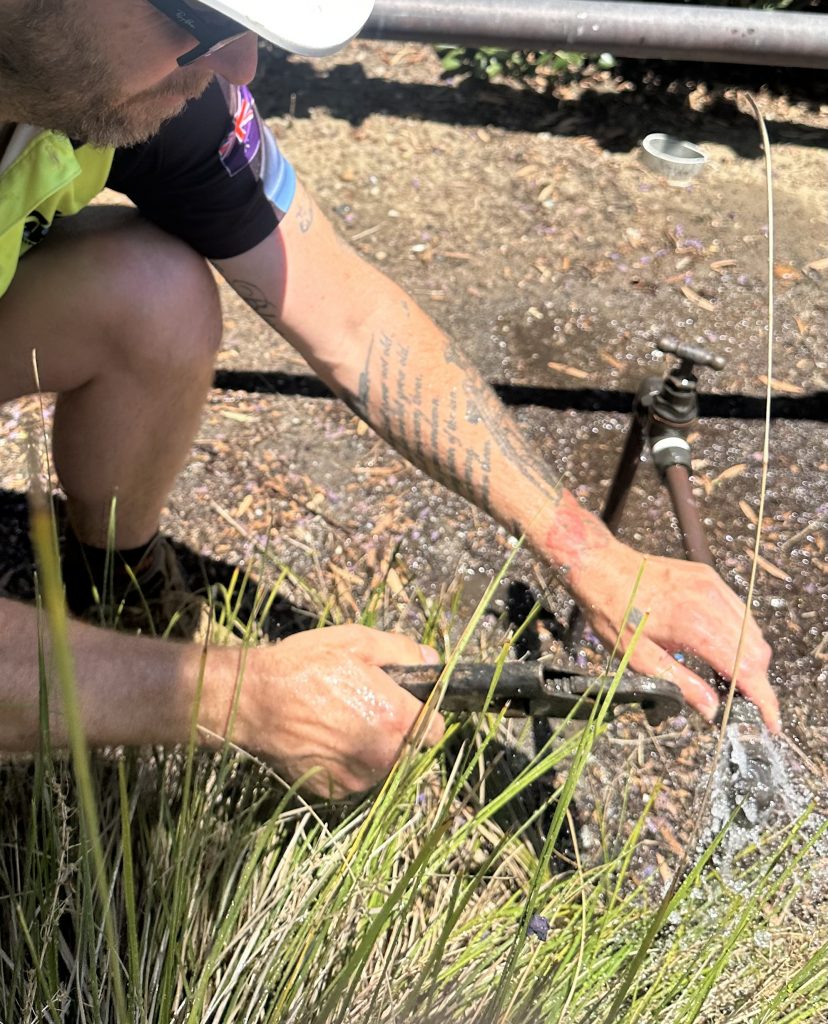
Some leaks are visible. Most are not. These are the signals worth paying attention to, roughly in order of how reliable they are.
The water meter test
This is the most useful thing you can do before calling anyone, and it takes about half an hour. Turn off every tap, including the washing machine and dishwasher, and do not flush a toilet. Note the meter reading, including the small dials that measure fractions of a litre, wait thirty minutes without using any water, then read it again.
If the numbers have moved, water is going somewhere it should not, and a leak on your side of the meter is yours to fix. If the meter has not moved, your supply pipework is probably intact, and what you are seeing may be condensation, a drainage issue, or moisture from outside.
Signs inside the house
- Stains or bubbling paint on ceilings and walls, particularly below a bathroom. Our guide on how to tell if a ceiling water stain is a plumbing leak separates a pipe problem from a roof problem.
- A musty or earthy smell that does not clear with ventilation, especially in a cupboard, laundry, or under a vanity.
- Warm patches on the floor, which can point to a leak in a hot water line running under a slab.
- Water pressure that has dropped without explanation. If it has dropped at only one fixture the cause is usually local, and our post on water pressure dropping only in the shower covers the likely culprits.
- Tiles or floorboards that feel spongy or lifted near wet areas.
- Mould that keeps returning in the same spot after cleaning. That is often being fed by something behind the wall, not by poor ventilation.
Signs outside the house
Outside, look for a patch of lawn that stays green and soft through dry weather while the rest browns off, water seeping from the edge of a driveway or garden bed with no rain to explain it, or the sound of running water in the walls when nothing is turned on.
| Not sure what you are looking at? If you have found a damp patch and cannot work out whether it is a leak or something else, describe it to us before you commit to anything. Local Blacktown Plumber can talk you through what to check, and if it turns out to be nothing, we will say so. Call (02) 9158 3589 or get in touch here. |
Why pipes leak in Blacktown homes
Blacktown covers a wide spread of housing, from post-war brick homes in the older suburbs through to new builds in the north west growth corridor. The leaks we see tend to track with that.
Age of the pipework. Older homes often still run galvanised steel or early copper supply lines. Galvanised pipe corrodes from the inside out, so it can look sound while the wall thickness quietly disappears.
Ground movement. Much of Western Sydney sits on reactive clay soils that swell when wet and shrink when dry. Over years, that movement stresses rigid pipework, particularly underground drainage and lines passing through footings.
Tree roots. Roots rarely break a healthy pipe outright. They find an existing hairline crack or a loose joint, follow the moisture, and widen the gap as they grow. That is why a recurring blockage can be an early warning of a broken line. If drains are involved, our page on blocked drain repairs explains how we diagnose it.
Water hammer. That banging when a tap shuts off quickly is a pressure shock travelling back through the pipes, and left alone it can loosen joints and fittings. There is more in our guide to why pipes bang and how to stop it.
Flexible hose connectors. The braided hoses under sinks and behind washing machines have a finite service life and tend to fail suddenly at full mains pressure, which makes them a common cause of serious water damage in otherwise well-maintained homes.
Which leaks need a plumber right now
Not every leak is an emergency, and treating every leak as one gets expensive. Here is how to sort them.
Call immediately
- Water spraying, gushing, or visibly flowing from a pipe or fitting
- A burst pipe of any size, anywhere on the property
- Water near a switchboard, power point, light fitting, or wiring
- Water coming through a ceiling, or a ceiling that is sagging
- A hot water system leaking from the tank body rather than a valve
- Sewage or waste water backing up into the house
- You have had to turn off the water at the meter to stop the flow
If you are dealing with a burst line right now, our burst pipe guide for Blacktown homes covers the immediate steps, and our emergency plumbing service operates outside business hours.
Book within a day or two
- A damp patch or stain that is slowly growing
- A meter that keeps ticking over with all taps off
- A toilet that runs constantly, or refills on its own between uses
- A hot water unit dripping steadily from a relief valve
- A water bill that has risen sharply without a change in household use
None of these will flood your house tonight, but all of them are wasting water or feeding damage, and they get more expensive the longer they run.
Can usually wait for a scheduled visit
- A tap dripping slowly from the spout
- A slightly weeping connection under a sink that a container can catch
- A showerhead that drips for a minute after being turned off
Worth fixing, but not worth an after-hours callout fee. Bundle them into one visit with anything else on your list and you will pay less overall. Most of it falls under general plumbing repairs.
What to do in the first ten minutes
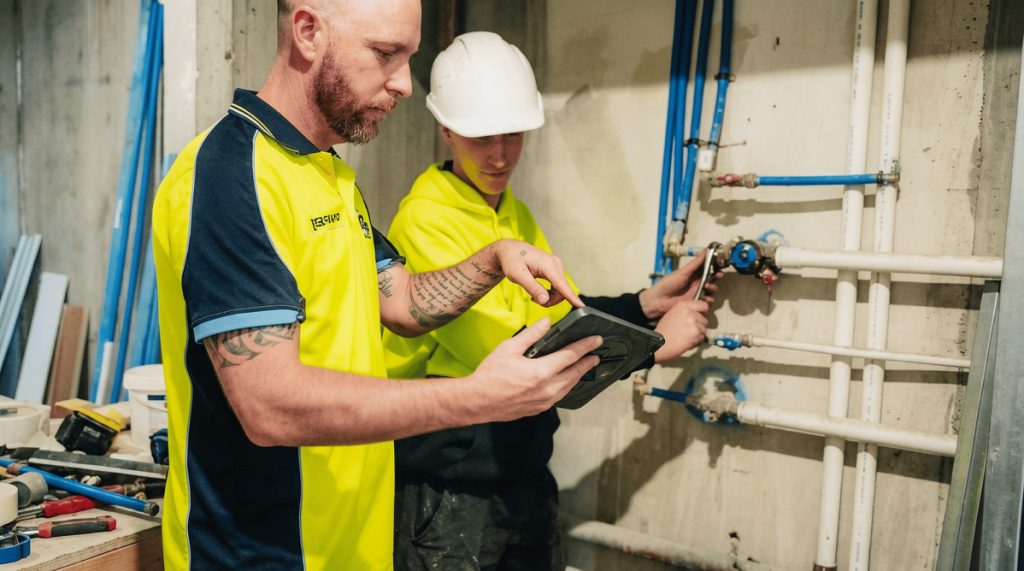
If you have found an active leak, the order of operations matters.
- Shut off the water. Use the isolation valve at the fixture if there is one. Otherwise turn off the mains at the water meter, usually near the front boundary, clockwise until it stops.
- Cut the power if water is near electrical fittings. Switch off at the safety switch before you go near the water. Never stand in water to reach a switchboard, and if you are in any doubt, stay out of the room and call an electrician alongside your plumber.
- Turn off the hot water system if the leak is on a hot line. Gas units have a control dial, electric units a dedicated breaker. Running a system dry can damage the element.
- Drain the pressure. Open the lowest tap in the house, often an outdoor or laundry tap, so remaining water escapes there rather than through the leak.
- Contain, then photograph. Buckets and towels first, then photos. For an insurance claim, images taken before cleanup are worth a great deal.
- Call a plumber and describe what you found: where the water is, whether it is hot or cold, and whether the meter is still turning. That helps us bring the right equipment on the first visit.
| Weighing up your options? Before you book anyone, it helps to know what a fair quote for this work looks like and which questions to ask. Our guide to fair plumbing prices in Blacktown sets out how repairs are typically priced. When you are ready, we will give you a clear quote before any work starts. |
How a plumber finds a leak you cannot see
Finding the leak is usually the harder half of the job. Repairing an exposed section of pipe is straightforward once you know exactly where the fault is, which is why a good plumber spends time on diagnosis before touching a wall.
It usually starts with an isolation test to confirm the leak is on the supply side, shutting off sections and watching the meter to narrow it to a zone. Then comes non-invasive detection: acoustic equipment that picks up water escaping under pressure, thermal imaging that shows temperature differences behind surfaces, and moisture meters that map how far the water has spread. For drainage faults, a CCTV drain camera can pinpoint a crack, a root intrusion, or a collapsed section. The point of all of it is to open up as little of your home as possible. A plumber who guesses will cut three holes to find one leak. A plumber who measures will cut one.
Repairs then depend on what is found. A single failed joint or short damaged run is cut out and replaced. Widespread corrosion in old galvanised pipe often makes replacing a whole section more sensible, because patching one pinhole in a line that is failing everywhere just buys a few months. A leak on a hot water unit may be a valve or the tank itself, and that distinction usually decides between a repair and a replacement, as our hot water installation and repairs page explains.
Reducing the odds of the next leak
- Read your meter monthly. Same day, same spot. A baseline means you spot an unexplained jump within weeks rather than at the next quarterly bill.
- Replace flexible hose connectors on a schedule rather than waiting for failure. Check the recommended service life and note the installation date somewhere you will find it.
- Deal with water hammer when it starts. The noise is a symptom of pressure that is stressing your fittings.
- Check your mains pressure. Pressure above what your fittings are rated for shortens the life of everything downstream, and a pressure limiting valve is a small job that protects the whole system.
- Act on repeat blockages rather than clearing them and moving on. A drain that blocks in the same place twice is telling you something about the pipe.
Key takeaways
- The meter test is the fastest way to confirm a hidden leak. All taps off, note the reading, wait thirty minutes, read again.
- Spraying water, burst lines, ceiling water, water near electrics, and sewage backups are emergencies. Shut off the mains and call straight away.
- Slow stains, running toilets, and unexplained bill increases are not emergencies, but should be booked within a day or two.
- A dripping tap can wait, and bundling small jobs into one visit costs less.
- Proper leak detection means less of your home gets opened up, so ask what equipment a plumber uses before booking, and photograph everything before cleanup in case of an insurance claim.
Frequently asked questions
How do I know if a leak is on my side of the water meter?
Turn off every tap and water-using appliance, then watch the meter for thirty minutes. If it moves, the leak is on your side and it is your responsibility. If it does not move but water is pooling near the street or the meter itself, the fault may sit with the water authority, and your plumber can confirm that.
Can I patch a leaking pipe myself until a plumber gets there?
A repair clamp or self-fusing tape can slow a leak enough to limit damage while you wait, and there is no harm in that, but it is not a repair. Water under mains pressure will find its way past a patch, and in New South Wales most plumbing work must be carried out by a licensed plumber.
Will a leaking pipe be covered by my home insurance?
It depends on the policy and the cause. Many policies cover sudden damage from an escape of water while excluding the cost of repairing the pipe itself, and gradual damage is frequently excluded. Photograph everything before cleanup, keep your plumber’s report, and check your product disclosure statement or speak to your insurer.
How long does leak detection usually take?
For a straightforward leak in an accessible area, detection and repair can often be done in a single visit. Leaks under slabs, inside wall cavities, or in underground drainage take longer, because diagnosis comes first and the repair may need excavation. Your plumber should give you a realistic estimate once they have seen the site.
Do you attend leaks after hours in Blacktown?
Yes. Local Blacktown Plumber provides emergency callouts for urgent situations such as burst pipes, major leaks, and sewage backups across Blacktown and the surrounding suburbs. If you are unsure whether yours qualifies, call and describe it, and we will tell you honestly whether it can wait until morning.
| Leaking pipe in Blacktown? Let us get it sorted today.
Whether it is a stain you have been watching for a fortnight or water coming through the ceiling right now, Local Blacktown Plumber can find the source and give you a clear quote before any work begins. We are a licensed local team covering Blacktown and the surrounding suburbs, with emergency availability when you need it. Call (02) 9158 3589 or request a callback here. |