Blocked Drains Blacktown: What’s Really Causing It and How It Gets Cleared
| Quick answer: Blocked drains in Blacktown are most often caused by a build-up of fat, hair, soap scum and food waste inside the pipe, wet wipes and other non-flushable items, tree roots pushing into older clay sewer lines, or storm debris and silt washing into external drains after heavy rain. A licensed plumber diagnoses the cause with a CCTV drain camera, then clears it using an electric drain machine or high pressure water jetter, and repairs damaged sections by relining or replacing the pipe. If water is backing up out of a floor waste, gully or toilet, treat it as urgent and call a plumber rather than reaching for a chemical drain cleaner. |
What’s in this guide
- The early signs of a blocked drain most people miss
- What’s really causing blocked drains in Blacktown homes
- Why properties in this part of Western Sydney block up more often
- How a plumber actually clears a blocked drain
- What you can safely try yourself, and what to leave alone
- How to stop the same drain blocking again
- Frequently asked questions
It Rarely Happens Overnight
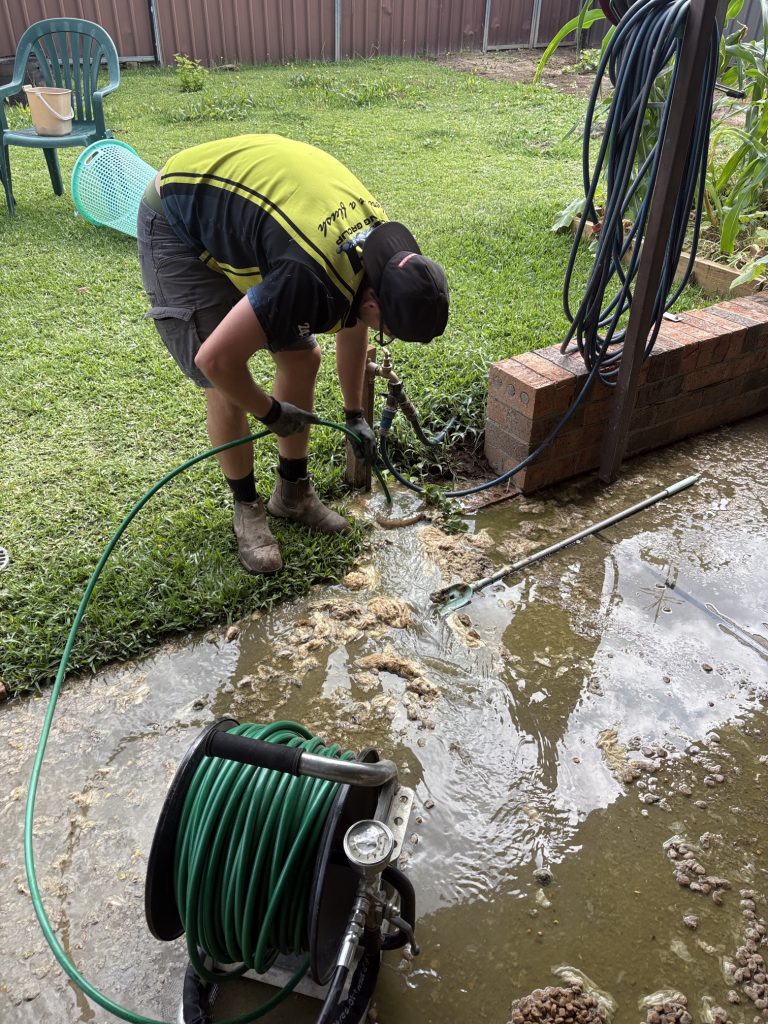
Most people call about blocked drains in Blacktown on the worst possible day. The kitchen sink has stopped draining halfway through cooking, or the shower is filling up around their ankles, or there’s water pooling near the gully out the back and a smell that wasn’t there last week. It feels sudden. Almost never is.
Blockages build. A drain that backs up on a Sunday night has usually been narrowing for months, and the household has quietly adapted without noticing: running the tap a bit longer, plunging the toilet every so often, putting up with the gurgle. It just finally ran out of room.
Which means the real question is not only “how do I clear this”, it’s “what put it there”, because a drain cleared without fixing the cause tends to block again. This guide covers both.
The Early Signs Worth Acting On
Before a drain stops completely, it tells you it’s struggling. The signals are easy to dismiss individually, but together they’re a fairly reliable picture:
- Slow draining. Water that lingers in the sink, basin or shower base instead of clearing away is the most common first sign.
- Gurgling. A toilet that bubbles when you run the washing machine, or a sink that gurgles when you empty the bath, usually means air is being pulled through a partially restricted line.
- Smells. A sour or sewage-like odour near a floor waste, gully or sink means waste is sitting in the pipe rather than moving through it.
- More than one fixture affected. If the shower and toilet are both sluggish, the problem sits further down the line.
- Water appearing where it shouldn’t. Pooling around an external grate, or water rising in the shower when the toilet flushes.
One useful distinction: if a single fixture is affected and everything else runs fine, the blockage is usually local to that fixture’s waste pipe. If several are slow at once, the main drain is involved and it’s a bigger job. Our guides on localised blockages when only one sink is blocked and the telling signs of blocked drains go further into both.
| Not sure how serious it is yet? Read through our blocked drain services in Blacktown to see how each type of blockage is diagnosed and what clearing it usually involves. No obligation, just useful background before you decide. |
What’s Really Causing Blocked Drains in Blacktown
In practice, most blockages fall into a handful of categories. The cause usually depends on which drain is affected.
Fat, oil and grease in the kitchen line
The number one cause of blocked kitchen drains, and almost always accidental. Cooking fat poured down the sink is liquid when hot and solid when it cools. It coats the pipe wall, catches food scraps and coffee grounds on the way past, and thickens every week. Rinsing with hot water does not remove it, it just pushes the problem further along the line.
Hair and soap scum in bathroom drains
Hair binds into a mat, soap residue and mineral deposits bond to it, and the whole mass anchors to the pipe wall or the trap. In a household of several people, a shower waste can restrict surprisingly quickly.
Wet wipes and non-flushable items
Wipes labelled flushable generally do not break down the way toilet paper does. They stay intact, snag on any rough spot or joint, and collect everything that follows. Sanitary products, cotton buds, dental floss and paper towel behave the same way, and in busier households this is one of the most frequent causes of a fully blocked sewer line.
Tree roots in the sewer line
Roots are drawn to the moisture inside a sewer pipe. They enter through hairline cracks, aged rubber ring joints or slightly displaced sections, then keep growing where conditions are ideal. Once established, a root mass traps solids and paper and can shut a line down entirely. With so many established Blacktown streets carrying mature trees, this is a recurring problem here. We’ve covered the warning signs of tree roots in Blacktown drains separately, because it’s worth knowing what to watch for before the line closes over completely.
Damaged, misaligned or collapsed pipes
Older properties may still have vitrified clay sewer lines. Clay is durable but brittle, and decades of ground movement or heavy vehicles overhead can crack a section or pull a joint out of line. Any lip or offset becomes a snag point. This is what sits behind blockages that keep returning to the exact same spot, which we’ve written about in recurring blockages at a pipe joint or bend.
Storm debris and silt in external drains
Stormwater pits, grates and downpipes collect leaves, bark and soil, and a heavy Sydney downpour flushes all of it into the drain at once. If the line is already restricted, water backs up and finds the lowest point available, often a garden bed, a garage floor or the base of the house. If your drains only misbehave when it rains, blocked drains after heavy rain explains what’s usually going on underneath.
Why Blacktown Properties See This So Often
The causes above are universal. What varies is how often they show up, and a few local factors stack the odds here.
Blacktown covers a wide mix of housing, from post-war homes in the older established pockets to newer estates further out. Older suburbs tend to have older drainage, which means clay pipework, aged joints and more entry points for roots, and mature street trees whose root systems reach well past the front fence. Much of Western Sydney also sits on reactive clay soils that swell when wet and shrink when dry, and that seasonal movement gradually stresses buried pipework.
Add heavy summer downpours that overwhelm stormwater lines already carrying a season’s worth of leaf litter, plus a good number of rentals, granny flats and dual occupancies running more household load through plumbing that was never sized for it, and the pattern makes sense. You can see the full range of suburbs we cover on our Blacktown service area page.
How a Plumber Actually Clears a Blocked Drain
There’s a logic to the process, and it’s worth understanding so you know what you’re paying for.
1. Locate and identify
The plumber narrows down which section of the system is blocked by checking which fixtures are affected and accessing the nearest inspection opening or overflow relief gully. Guessing at this stage wastes time and money.
2. CCTV drain camera inspection
A waterproof camera on a flexible rod is fed into the line so the blockage can be seen directly. This is what separates a real diagnosis from a guess: it shows whether you’re dealing with grease build-up, a root mass, a foreign object, a crack or a collapsed section, and how far along the pipe it sits. Many cameras also carry a locator so the spot can be marked at ground level, which matters if excavation is needed.
3. Mechanical clearing with a drain machine
An electric drain machine, often called an eel, drives a rotating cable with a cutting head down the pipe. It’s effective on hair, general build-up and lighter root intrusion, and it’s usually the quickest way to restore flow.
4. High pressure water jetting
For heavier jobs, a jetter sends water down the line through a specialised nozzle at very high pressure. Rather than boring a hole through the middle of the blockage, jetting scours the full internal diameter of the pipe, stripping out grease, silt and root fibres. It’s the better option when you want a drain that stays clear.
5. Root cutting
A cutting head sized to the pipe shears the root mass back to the pipe wall. Important caveat: this restores flow but does not close the crack or joint that let the roots in. Unless the entry point is repaired, they grow back.
6. Repair, if the camera found damage
If the camera reveals a cracked, offset or collapsed section, clearing alone is a temporary fix. The repair may involve pipe relining, where a resin liner is cured inside the existing pipe to form a new seamless wall without digging up the yard, or excavation and replacement where relining isn’t suitable. A good plumber will show you the footage and explain why one option suits your property over the other.
| Comparing your options? If the same drain has been cleared more than once, ask for a camera inspection before anyone starts work. Knowing whether it’s a build-up or a damaged pipe changes the entire conversation about cost. Browse our general plumbing services or get in touch for a free quote. |
What You Can Safely Try, and What to Leave Alone
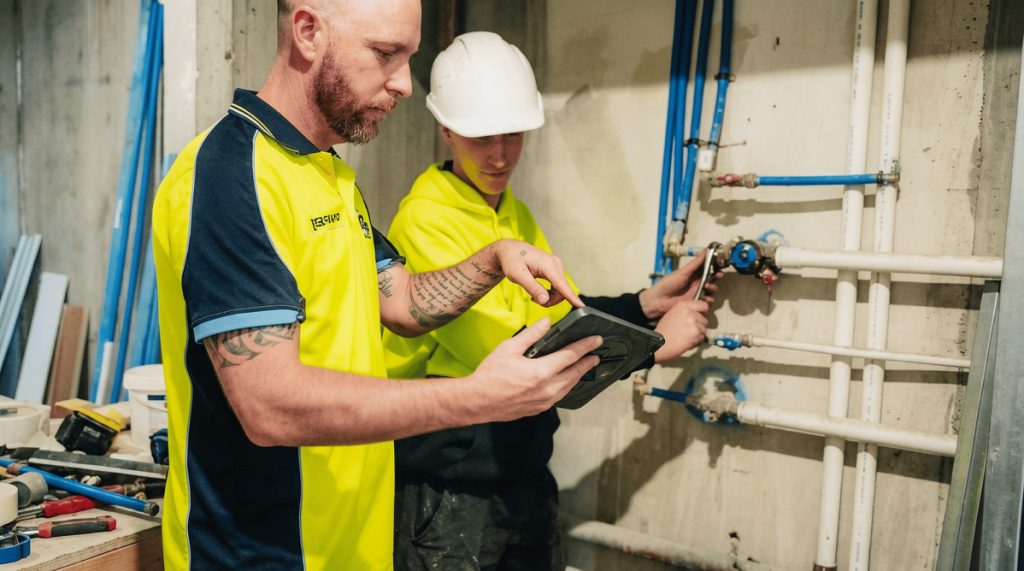
Some blockages genuinely are a five minute fix. Others get worse with well-meaning intervention.
Reasonable to try yourself:
- Remove and clean the strainer, plughole or pop-up waste. The build-up is often right at the top.
- Use a cup plunger with enough water in the fixture to cover the rim, and block any overflow outlet so you can build suction.
- Pour a kettle of hot (not boiling) water with a squeeze of dishwashing liquid down a slow kitchen sink to shift a light grease film. Avoid boiling water on PVC pipework.
- Clear leaves and debris out of external grates, gutters and stormwater pits, especially before a forecast storm.
Better left to a licensed plumber:
- Caustic drain cleaners. They generate heat, may damage older pipework and seals, often fail to clear the actual obstruction, and leave a caustic solution sitting in the line for whoever opens it up.
- Hired jetting or eel equipment. Without experience these can damage pipework or get stuck, turning a clearing job into an excavation.
- Anything involving sewage overflow. Wastewater surfacing in the yard or backing up into the house is a health risk and needs professional attention.
- Repeat blockages. More than twice in the same place means the cause is structural, and no amount of plunging changes that.
How to Keep It Clear
Prevention works here, and most of it costs nothing.
- Pour cooking fat and oil into a container, let it set, and bin it. Wipe greasy pans out with paper towel before washing.
- Fit drain strainers in the kitchen sink and shower, and empty them regularly.
- Flush only the three Ps: pee, poo and paper. Wipes go in the bin regardless of what the packet claims.
- Keep external grates and gutters clear, and check them before storm season.
- Think about what you plant and where. Water-hungry species near the sewer line invite trouble later.
- If the property has known root issues or older clay drainage, a camera inspection every couple of years costs far less than an emergency excavation.
Our guide to preventing blocked drains in Blacktown goes further into the seasonal maintenance side of it.
Key Takeaways
- Blocked drains build up gradually. Slow draining, gurgling and odours are early warnings worth acting on.
- Kitchen blockages are usually grease. Bathroom blockages are usually hair and soap. Sewer blockages are usually wipes or tree roots.
- Blacktown’s older clay drainage, mature trees, reactive clay soils and heavy storms all raise the odds.
- A CCTV camera inspection turns guesswork into a proper diagnosis. Jetting clears the full pipe diameter and generally lasts longer than an eel.
- Cutting roots restores flow but does not fix the crack that let them in.
- Avoid caustic drain cleaners, and treat repeat blockages in the same spot as a structural fault.
| Drain blocked right now? Don’t wait for it to overflow. Local Blacktown Plumber is a family owned team servicing Blacktown and the surrounding suburbs, with free quotes, honest pricing and 24/7 emergency plumbing when it can’t wait until morning. Call (02) 9158 3589 and we’ll find the actual cause and clear it properly. |
Frequently Asked Questions
How much does it cost to clear a blocked drain in Blacktown?
It depends on the cause and how accessible the line is. A simple sink or shower blockage cleared at the fixture sits at the lower end. A root-affected sewer line needing camera inspection, jetting and root cutting costs more, and structural repairs are a separate job again. Ask for a quote after diagnosis rather than before.
Is a blocked drain an emergency?
Not always. If sewage is surfacing in the yard, backing up into the shower or toilet, or you have no usable toilet, treat it as urgent. A single slow-draining basin can usually wait until normal hours.
Will a chemical drain cleaner fix it?
It may shift a light film, but it often will not clear a genuine blockage, and it can damage older pipes and seals while leaving a caustic solution sitting in the line. For anything beyond a mildly sluggish drain, mechanical clearing is safer.
Why does the same drain keep blocking?
Almost always something structural is holding waste up: roots re-entering through a crack, a displaced joint, a sag, or a partially collapsed section. Clearing treats the symptom. A camera inspection shows what’s actually there so it can be repaired.
Who pays for a blocked drain in a rental property?
As a general rule in New South Wales, the landlord covers repairs caused by fair wear and tear or structural faults such as root intrusion, while the tenant may be liable where misuse caused it, for example flushing wipes. Circumstances vary, so check the tenancy agreement and NSW Fair Trading guidance if you’re unsure.
Can tree roots be removed permanently?
Cutting restores flow, but roots regrow through the same entry point unless it’s sealed. Relining the affected section creates a continuous internal wall with no joints to exploit, which is the closest thing to permanent short of replacing the pipe.